
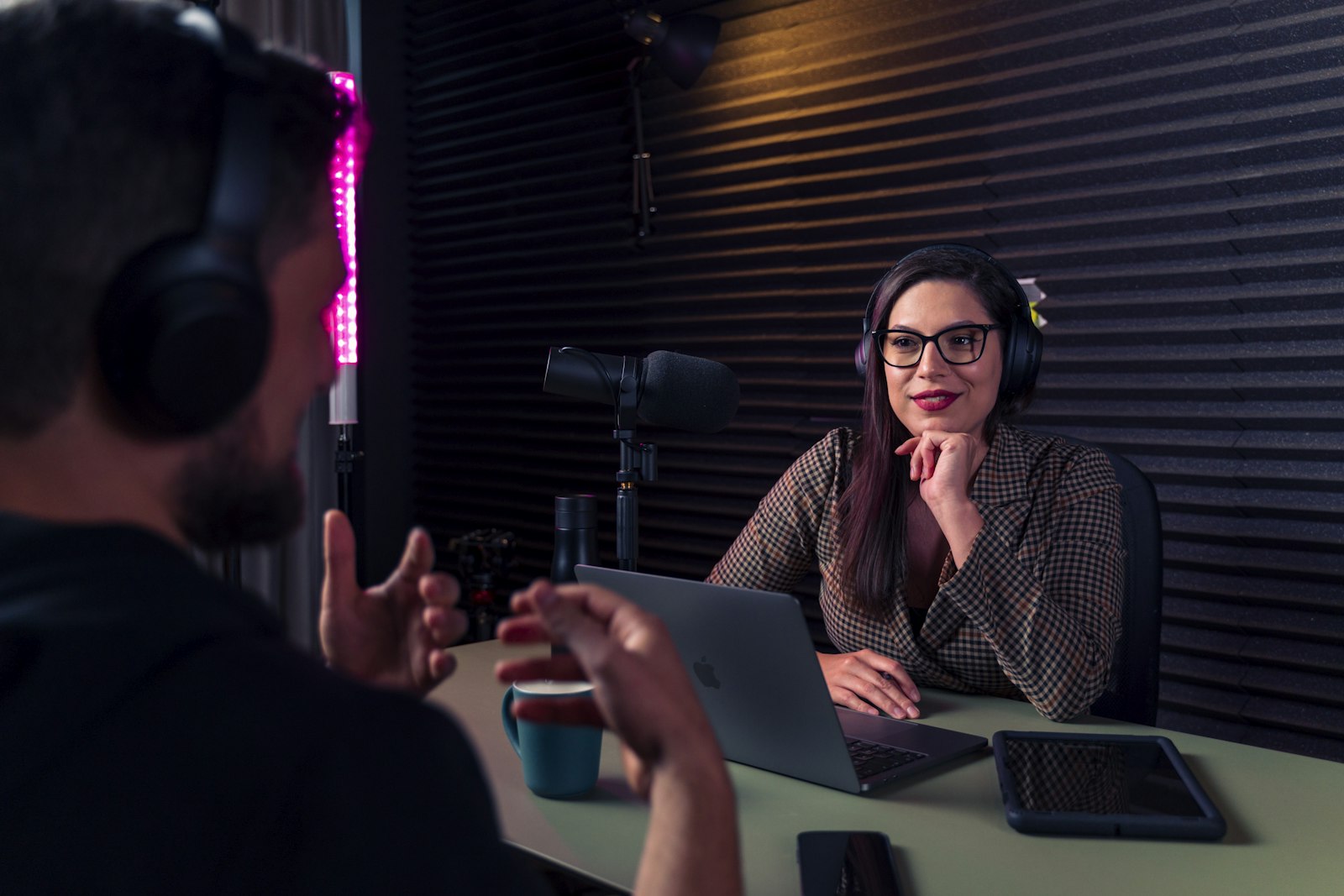
Most artists treat a radio interview as a single moment, then watch it disappear. This article shows you how to extend that one appearance into a month of TikTok content.
You will learn how to identify memorable moments, select strong soundbites, edit vertical clips, and organize a consistent publishing plan. All of this will point curious listeners toward your music. Finally, we share why services like Celebian can reliably make your TikTok content easier to discover.
Before You Clip Anything, Get the Raw Materials Right
The first mistake most artists make happens before a single clip is exported. They walk out of the station with nothing but a memory and a link to a stream. That will expire in two weeks, so it’s a good idea to ask for the audio file.
Furthermore, ask for video if the station records it. You’ll also want to ask the host whether you can cut the conversation for social media. Most independent and community stations will say yes. Also, a written confirmation in your email inbox protects you from awkwardness later.
It’s good practice to credit the station and the host in every clip. It costs nothing and turns a one-time booking into a relationship that might invite you back.
Identify the Highlights
Write down the three or four moments that made you feel something while the conversation is still fresh. These are the moments you rehearsed. The ones where you forgot the microphone was there.
For example:
- A story about the first time you heard your song in a grocery store.
- A blunt admission that a particular verse took eleven drafts.
- A joke that landed so well the host broke character.
The Anatomy of a Great TikTok Clip
Here are the details to keep in mind when executing on your TikTok clip:
- Format: Start vertical at 1080 by 1920 and keep runtime near 21 to 44 seconds. That length allows one clear thought while surviving a thumb already moving past weaker posts. Hence, treat it as a guardrail rather than a strict rule.
- Opening: Begin inside the moment, not before it. For instance, open on the laugh, the raised eyebrow, or the line that sounds like a dare. You’ll find that a setup question kills momentum before the viewer has any reason to care. Also, cut the handshake and skip hello.
- Texture: Add visual texture beyond a static talking head. A good practice is to cut between studio footage, a demo snippet, a lyric sheet, or the single artwork. The aim is a world, so vary the frame often and keep it moving always.
- Captions: Burn captions into the frame because most viewers watch muted. Furthermore, keep cues to three or four words and protect the lower third. You’ll also need to keep text clear of the right edge where interface buttons sit.
- Audio: Layer the interview audio as the spine, then add the upcoming single softly underneath a process clip. Ideally, the dialogue stays dominant and the trend remains seasoning rather than the meal.
Three Clip Personalities Worth Building
Not every clip has to do the same job. A sustainable rotation usually pulls from three distinct wells. Here’s a table sharing the most popular ones:
| Clip Type | What It Does | Best Source Moment | Typical Length |
|---|---|---|---|
| Personality | Builds familiarity and affection | A joke, a confession, a strong opinion | 15 to 30 seconds |
| Process | Establishes craft and intention | A story about writing, recording, or failing | 25 to 45 seconds |
| Release | Converts curiosity into a stream or pre-save | A line about what the song means | 15 to 25 seconds |
Consistent Publishing Plan
A consistent publishing plan turns a pile of clips into a month of presence with more TikTok likes. Therefore, map every clip onto a calendar before the first post goes live. Lead with your strongest personality clip on a Tuesday or Wednesday evening, and follow with a process clip two days later. You’ll also want to keep one clip in reserve for release week.
Note that consistency beats volume. Hence, one clip every other day for three weeks will outperform five clips dumped on a Sunday. The algorithm rewards follow-up engagement, and the audience rewards a recognizable rhythm.
Make sure to give every clip a destination, which could be:
- Pinned comment with the pre-save link
- Caption pointing to the full interview
- Bio link that matches the clip
This does a great job of moving curious listeners closer to your music. You’ll also increase TikTok likes, which can help push content even further in the algorithm.
Supporting a Clip After Posting
This is where deliberate moves can matter, especially when a clip already shows organic traction. You’ll see that Celebian's TikTok likes tool fits into a broader music discovery effort. It’s a low-friction way to give a key interview clip a stronger early signal.
Here’s what you need to know:
- Features: Celebian sells TikTok likes in packages from 100 to 10,000. Also, it only needs a public video link or username, never asks for a password, and starts delivery quickly.
- Strengths: Setup is simple, pricing is transparent, and the service is TikTok-only rather than spread across platforms. That suits artists testing one clip at a time.
- Safety: TikTok's guidelines ban bought likes and remove fake engagement it detects. Fortunately, Celebian uses real accounts with high quality likes.
Treat Celebian as a targeted accelerant, not a foundation. It’s a good idea to start small, watch the account, and keep the music and editing doing the real work. Previous customer reviews of Celebian are mostly positive, so see what the fuss is about for yourself.
Improve Your Radio Interview TikTok Clips Today
The radio interview is the raw material, and the clips are how you refuse to let a good half hour vanish into the airwaves. Listen back with a stranger's ears and clip the moments that make you sound like a person worth following.
Don’t forget to caption them properly, and put them on a calendar rather than on a whim. When one clip starts to move, you can give it a bigger nudge forward when buying Celebian TikTok likes.
Photo: Flipsnack on Unsplash


.jpg)