
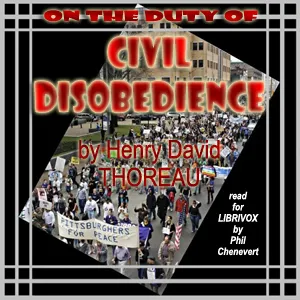
Tentang buku ini
"That government is best which governs least" is the famous opening line of this essay. The slavery crisis inflamed New England in the 1840s and 1850s. The environment became especially tense after the Fugitive Slave Act of 1850. A lifelong abolitionist, Thoreau delivered an impassioned speech which would later become Civil Disobedience in 1848, just months after leaving Walden Pond. The speech dealt with slavery, but at the same time excoriated American imperialism, particularly the Mexican–American War. Thoreau asserts that because governments are typically more harmful than helpful, they therefore cannot be justified. Democracy is no cure for this, as majorities simply by virtue of being majorities do not also gain the virtues of wisdom and justice. The judgment of an individual's conscience is not necessarily inferior to the decisions of a political body or majority, and so "[i]t is not desirable to cultivate a respect for the law, so much as for the right. The only obligation which I have a right to assume is to do at any time what I think right.... Law never made men a whit more just; and, by means of their respect for it, even the well-disposed are daily made the agents of injustice." He adds, "I cannot for an instant recognize as my government [that] which is the slave's government also." from Wikipedia
Bab
Bab berikutnya mulai otomatis. Browser ini mengingat sampai mana kamu mendengarkan.
- 1Part 134:16 · dibacakan oleh Phil Chenevert
- 2Part 232:54 · dibacakan oleh Phil Chenevert
Mungkin kamu juga suka
 Walden, Version 2Henry David Thoreau11 jam 58 mnt
 WalkingHenry David Thoreau1 jam 29 mnt
 On the Duty of Civil DisobedienceHenry David Thoreau1 jam 21 mnt
 On the Duty of Civil Disobedience (Version 2)Henry David Thoreau1 jam 2 mnt
 Journal of Henry David Thoreau Volume 1: 1837 - 1846Henry David Thoreau19 jam 24 mnt
 Canoeing in the WildernessHenry David Thoreau2 jam 41 mnt
 ExcursionsHenry David Thoreau9 jam 58 mnt
 Walden oder Leben in den WäldernHenry David Thoreau13 jam 52 mnt


