

The Two Grids: Why Policy is Breaking Physics - Meredith Angwin Stops by the Energy News Beat Podcast
· 42 min
Show notes
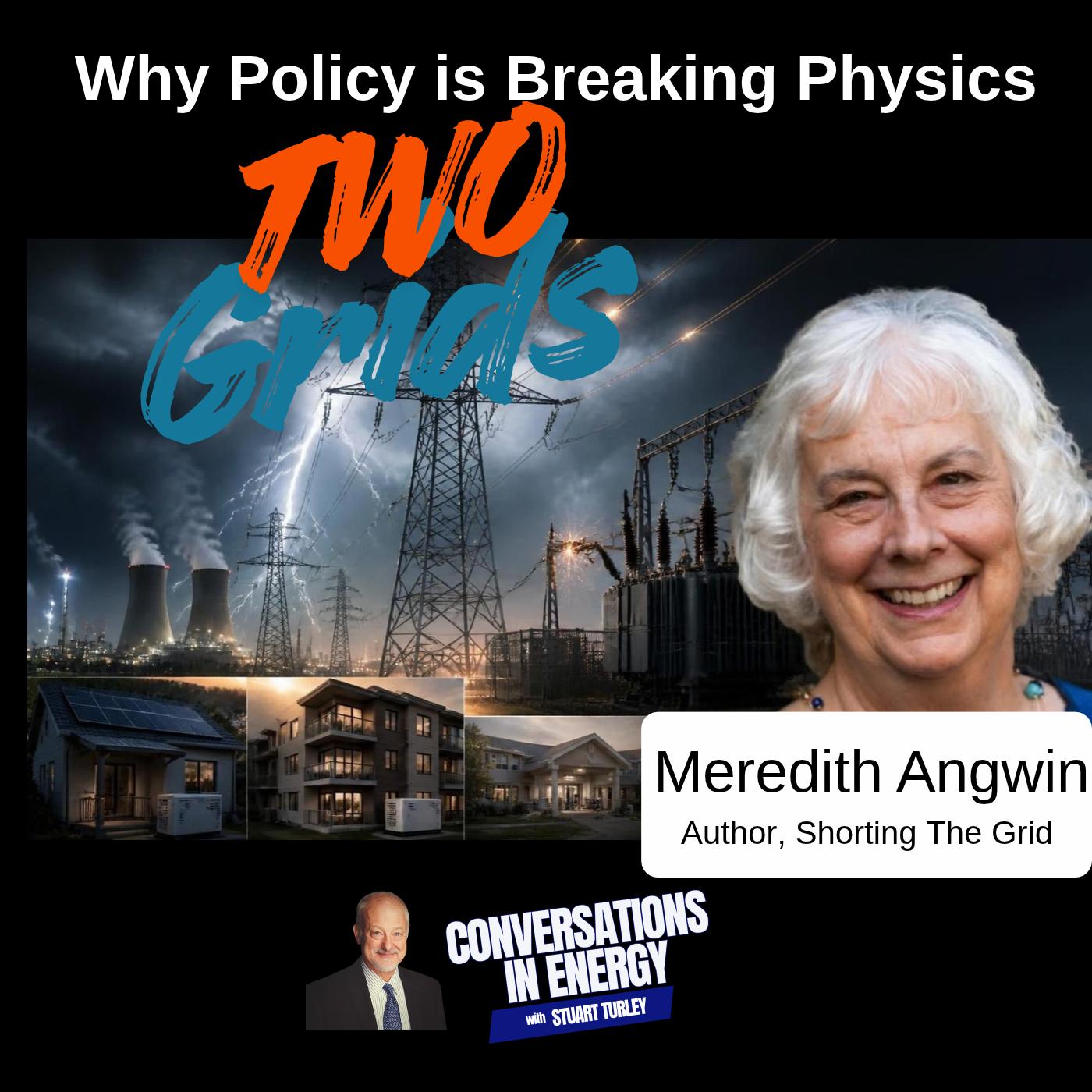
Welcome back to the Energy Newsbeat podcast. Today, we’re diving deep into one of the most critical—and misunderstood—issues facing America’s energy future. Most people think the grid is just the wires and power plants they see.
But what if I told you two grids are operating at the same time, and they’re increasingly working against each other? One is governed by the laws of physics. The other is governed by policy papers.
And right now, policy is winning—with dangerous consequences. Our guest today is Meredith Angwin, author of “Shorting the Grid” and what we call the national treasure of energy. She’s here to explain why your electricity bills are skyrocketing, why rolling blackouts are coming, and why the $10.3 trillion we’ve spent on wind and solar hasn’t made our grid more reliable—it’s made it more fragile.
If you care about keeping the lights on, affording your power bill, or understanding the real state of America’s energy infrastructure, you need to hear this conversation.
We absolutely think the world of Meredith Angwin and her work. Check out her Substack here:
https://meredithangwin.substack.com/
Check out her book here: Shorting The Grid
1. The Two Grids Concept
Meredith explains her theory that there are two distinct grids operating simultaneously:
The Physical Grid: The actual infrastructure you can see (transmission lines, substations) governed by immutable physics and laws
The Policy Grid: A set of regulations and policies (net metering, renewable portfolio standards, net-zero mandates, renewable energy certificates) that determine how the physical grid is paid for
The key insight is that policy decisions often ignore physical realities, creating conflicts between what regulations demand and what physics allows.
2. The Fatal Trifecta of Grid Errors
Meredith identifies three critical mistakes grids can make, with a focus on:
Installing too many renewables without adequate backup systems
Failing to account for inertia and support from rotating machinery
Not understanding the grid’s need for reliable baseload power
3. Renewable Energy Limitations and Common-Mode Failure
Solar’s Common-Mode Failure: All solar installations shut down simultaneously at sunset, creating a predictable vulnerability unlike traditional power plants
Wind Variability: Wind doesn’t always blow when needed
Storage Requirements: Wind and solar must be paired with expensive storage systems to be grid-viable, yet these costs aren’t factored into affordability claims
4. Grid Resilience and Baseload Power
Traditional grids are designed with 110-120% capacity to handle plant outages
Nuclear, coal, natural gas, and hydro provide reliable baseload power
The grid cannot function reliably with high percentages of intermittent renewables without massive backup infrastructure
5. International Energy Policy Failures
Germany: Shut down nuclear reactors, closed coal plants, and is flooding its last surface coal mine—creating energy dependence
France: Neglected nuclear…
Website: podcast.show


