

Counterpunch, reality therapy, and giving young people real tools for life with Mercedas Taaffe-Cooper
· 49 min
Jakson kuvaus
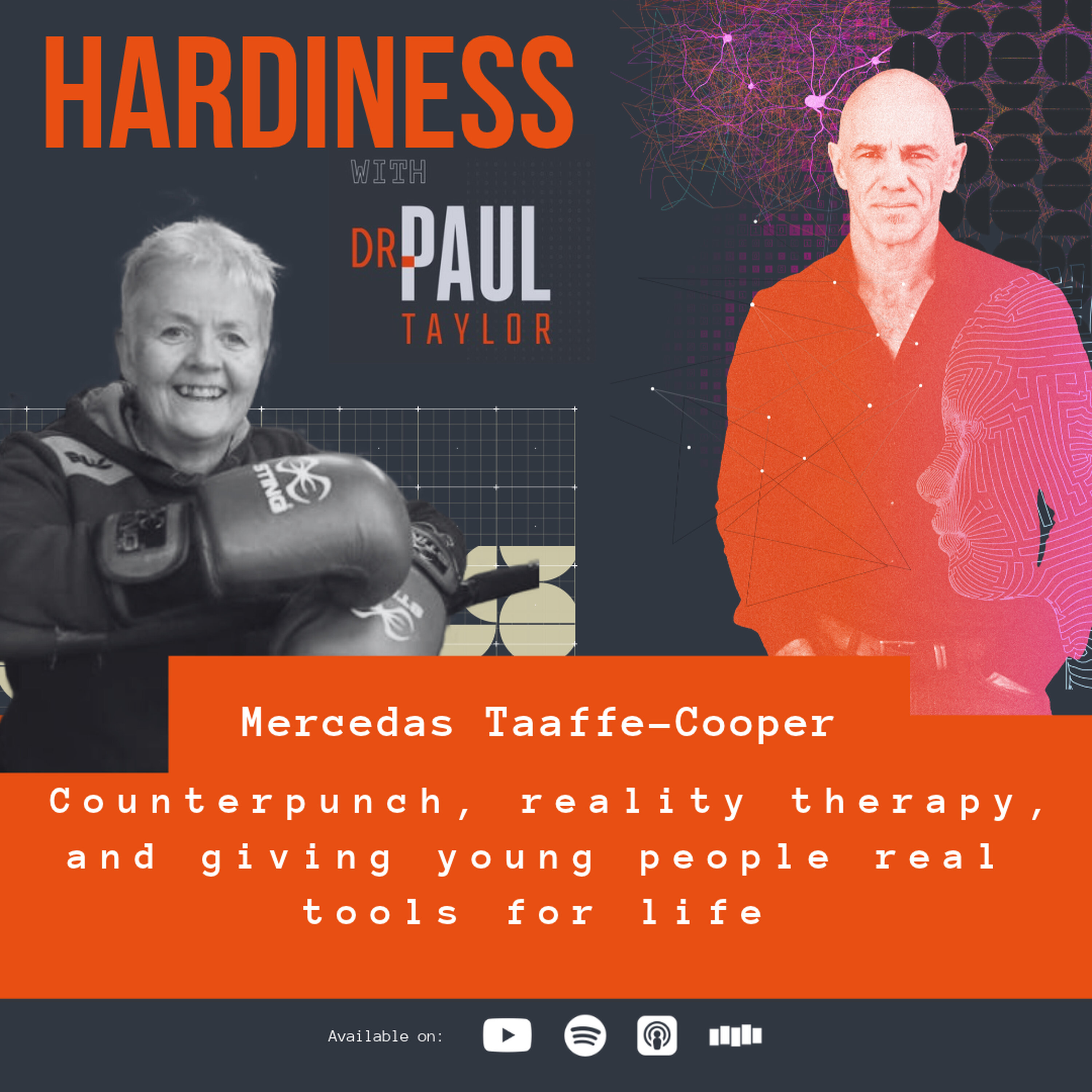
The biggest mistake in youth mental health? Treating kids like they’re broken instead of teaching them how to move, act, and build resilience. Mercedes Taaffe Cooper reveals why early intervention and education, not endless labels and talk therapy, are changing the game for young people. Paul and Mercedes unpack the deeper problem with the medical model, how normal adolescent struggles get turned into diagnoses, and why that can create more harm than help. Mercedes shares the personal journey that took her from elite boxing and coaching the Irish team to clinical psychology, reality therapy, and ultimately building Counterpunch, a program designed to help kids learn through action, not just conversation.
You’ll discover:
• Why reality therapy and choice theory focus on doing rather than overthinking
• How the "front two wheels" car analogy helps kids understand thinking, feeling, and behaviour
• Why combat sports can be powerful tools for confidence, regulation, and self-awareness
• How a 24-week, three-phase program moves kids from connection to leadership
• Why peer mentoring is often more powerful than adult advice for adolescents
Mercedes also explains how Counterpunch works in boxing gyms and youth-facing settings, why it’s especially effective for kids who feel isolated, and how the program is now scaling online so more facilitators can deliver it. From goal-setting and embodied learning to social connection and self-efficacy, this episode makes a compelling case for giving young people practical tools before problems become crises. Essential listening for parents, coaches, teachers, and anyone working with young people who wants to create real change, not just another conversation. If you care about building confidence, resilience, and lifelong skills, this one is for you.
Timestamps
(02:11) Mercedas Taaffe Cooper’s background in boxing, coaching, psychology, and moving to Australia
(03:59) Discovering reality therapy and choice theory through research and training
(05:48) Building Counterpunch from pilot program to scalable youth model
(07:56) Reality therapy explained - focusing on action instead of just thinking
(10:19) Why action is the real engine of change for young people
(13:43) Why Mercedas rejected the medical model and built a strengths-based program
(15:05) The harm of overusing labels and diagnoses with kids
(18:05) The original research, the boxing component, and the first curriculum ideas
(20:21) Moving from government pilot to a private program in South Australia
(21:19) Taking the training online and building a replicable system
(23:03) What a Counterpunch session looks like from induction to a 24-week structure
(24:21) VSMART goals and linking values to physical progress
(26:16) The three phases - body awareness, relationships, and leadership
(27:13) Why martial arts and team sport build resilience and confidence
(32:38) Why group connection and peer mentoring matter so much
(34:15) Why combat sports work for youth…
Sivusto: omny.fm
