
Better Podcast Audio: What AI Can and Cannot Fix | Owen Grover #697
· 53 Min. · Folge 697
Shownotes
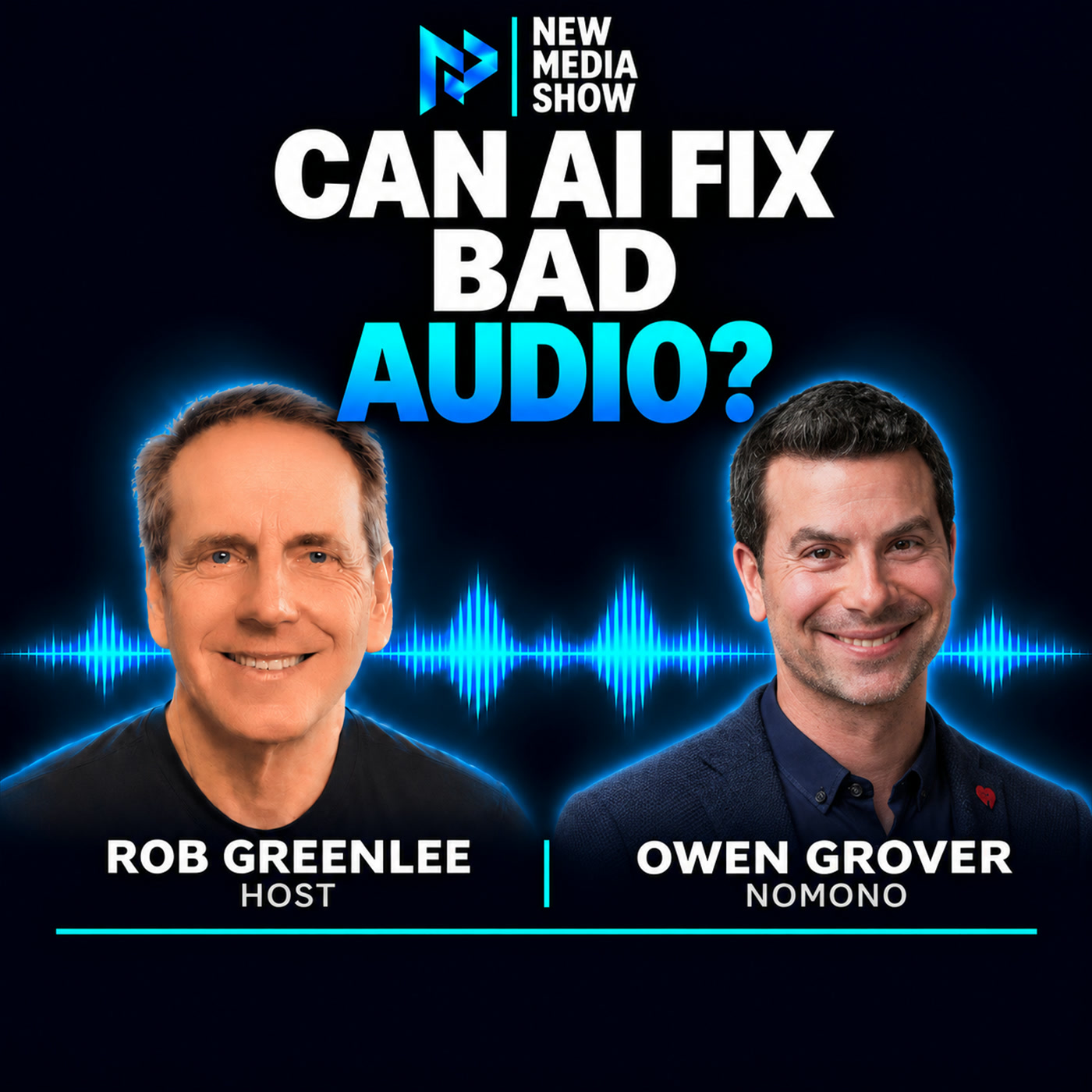
Watch episode 697 with Owen Grover on the New Media Show YouTube channel.
Better podcast audio starts with a practical question: can listeners follow the conversation comfortably, wherever it was recorded? On New Media Show episode 697, Rob Greenlee talks with Owen Grover, Nomono’s U.S. general manager, about portable recording, AI audio enhancement and why audio deserves attention even when the finished show includes video.
The conversation moves from Nomono’s Sound Capsule and phone-based Stellar Kit to audio-video synchronization, spatial audio and the company’s Platform API and MCP connector. Rob and Owen also explore the difference between using AI to support human production and generating an entire performance, plus what AI-assisted discovery could mean for open RSS distribution.
Build an audience. Earn trust. Grow a media business.
Three editorial takeaways
• Check the listening experience independently of the picture. Owen argues that audio remains essential even when someone discovers a podcast on a video platform. Review a section with the screen off: can you follow each voice, and does the conversation still make sense?
• Choose processing around the story you want to preserve. The field-recording discussion distinguishes unwanted noise from the atmosphere that places a listener inside a scene. Listen for intelligibility, natural voices and useful ambience before deciding how much enhancement to apply. The episode describes product capabilities; it does not provide an independently measured comparison.
• Keep human judgment in an AI-assisted workflow. Owen separates production tasks, creative ideation and fully generated content. Decide what AI is helping with, check the output and retain responsibility for what you publish. His preference for human hosts and performers is an editorial position, not a universal audience finding.
One practical action
Choose a 30-second passage from an interview you have permission to process. Keep the original, make one processed version and compare them at similar playback loudness, first without the picture and then with it. Spend no more than 30 minutes. Note unclear words, unnatural artifacts, lost ambience and any synchronization problem. Keep the processing only if it improves the listening experience without changing the intended meaning. This is an editorial exercise inspired by the discussion, not a test performed during the episode.
Why audio still matters in a video podcast
Rob opens with familiar recording problems: room echo, background noise and voices that are difficult to follow. Owen’s response centers on treating the audio track as a primary part of the audience experience. He distinguishes video used for discovery and promotion from a requirement that every podcast become a video-first production.
They discuss listening while driving, walking or doing household tasks, as well as the companionship a recurring human conversation can create. Their point for producers is to…
Website: newmediashow.com

