
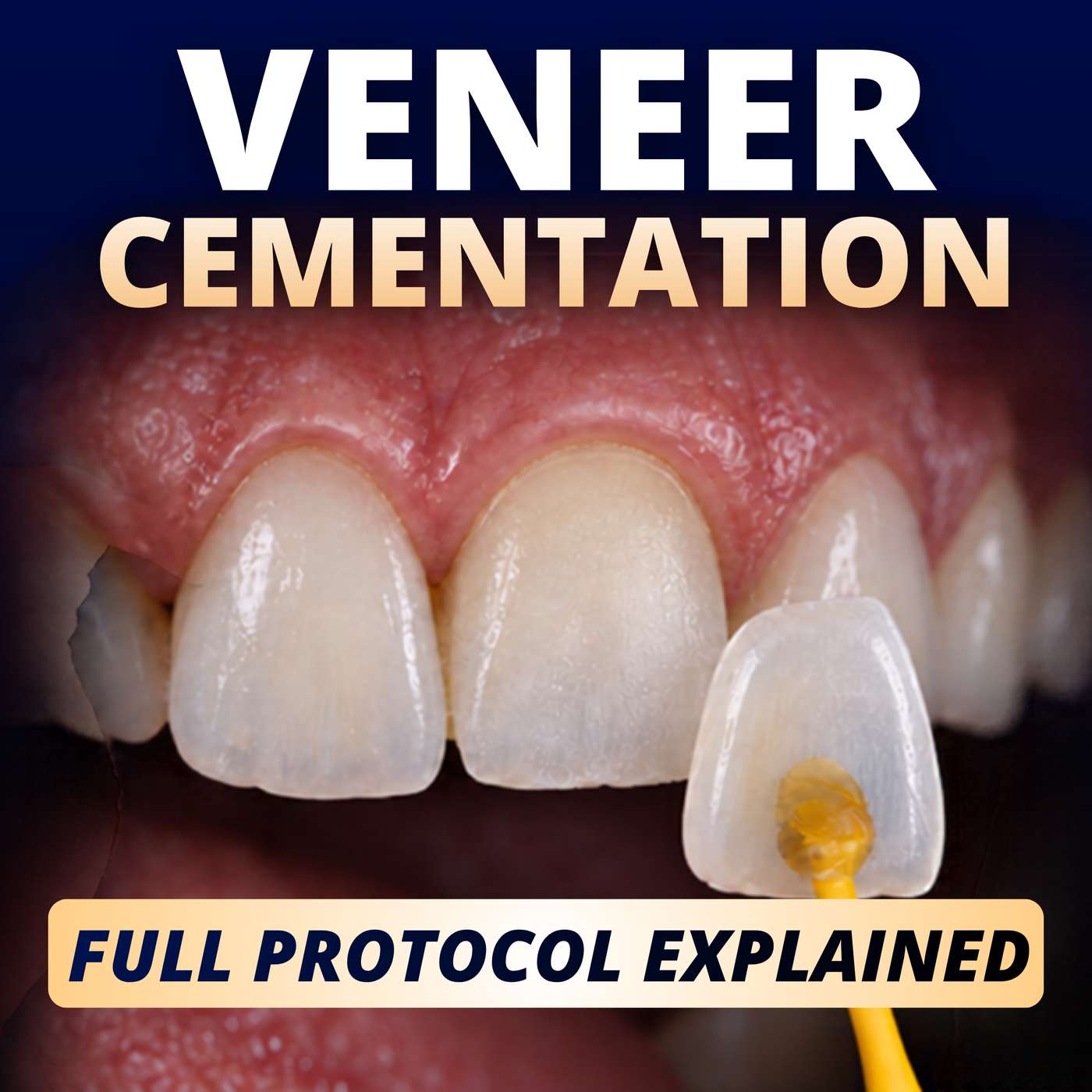
How to Bond Veneers: The Full Seat Appointment, Step by Step - PDP291
· 60 min
Jakson kuvaus
🦷 Plaque Friday™ is here!
Get 20% off Protrusive Guidance Ultimate for as long as you stay, plus 7 days free to try it. That’s every masterclass, AskJaz, verifiable CPD on hundreds of podcast episodes, and our new live series Caries, Cracks and Contact Points with Dr Ronit Patel. Use code PF26 at checkout. Ends Monday 30 November, 11:59pm UK.
👉 https://protrusive.co.uk/plaquefriday
Is it a fit appointment — or a try-in? (The word you choose changes the whole visit.)
Water try-in or try-in paste — and what do you do when minimal-prep veneers just won’t stay put?
Why does the last veneer in the sequence so often refuse to seat?
And how much excess cement is still hiding after you’ve cleaned up?
The bonding appointment is where a veneer case is won or lost on the day. In this episode, Dr Tejas Patel — a cosmetic dentist who runs a boutique, veneer-focused practice in Austin, Texas, with patients flying in from across the US — walks through his complete seat protocol: the checkpoints that should be closed before the patient arrives, the try-in, cement choice, the exact bonding and tacking order, clean-up and final checks. Then the troubleshooting: why veneers won’t seat, how to remove temporaries and old veneers without damaging teeth, and when it’s fine to go back to temps. One clinician’s tried-and-tested protocol — yours may differ, and that’s the point.
Protrusive Dental Pearl: Onlays Fail by Fracture — So Prevent It, and Repair It
The most common complication of a ceramic onlay or overlay isn’t debonding — it’s fracture. A systematic review of ceramic onlays found fracture was the leading cause of failure, followed by debonding and caries. Longevity was better where the preparation allowed at least 2 mm of occlusal ceramic, and risk rose further back in the mouth and with parafunction (though the wider literature on bruxism is mixed). So don’t skimp on occlusal reduction: the strength of the tooth comes from the gingival third, and sacrificing a little coronal structure to give the ceramic its ideal thickness is still far more conservative than a crown.
If a fracture does happen, and you can reach and isolate it, repair it rather than replace it. Bur-and-bond alone performs poorly: etch the exposed ceramic with hydrofluoric acid, then silane, then composite (the literature is mixed on adding a bonding agent first). Wary of HF in the mouth? A one-step etch-and-prime ceramic primer is the alternative. Then ask why it fractured — was the occlusal thickness there?
What You’ll Take From This Episode
• The checkpoints before the day — what has to be approved, scanned and verified before the patient ever sits down.
Try-in, not fit — how framing the visit protects you and the patient when something isn’t right.
• The bonding sequence — the order, the tack, and the trick that means you never bust a contact open with a bur.
• Light-cure or dual-cure — which cement for porcelain, and what to judge any cement on.
• When a veneer won’t seat — the…
Sivusto: share.transistor.fm


