
About this book
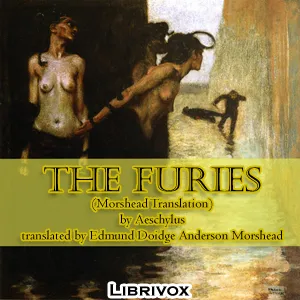
The Oresteia is a trilogy of Greek tragedies written by Aeschylus concerning the end of the curse on the House of Atreus. The name derives from the character Orestes, who sets out to avenge his father's murder. The only extant example of an ancient Greek theater trilogy, the Oresteia won first prize at the Dionysia festival in 458 BC. When originally performed, it was accompanied by Proteus, a satyr play that would have followed the trilogy. Proteus has not survived, however. In all likelihood the term "Oresteia" originally referred to all four plays; today it generally designates only the surviving trilogy. Many consider the Oresteia to be Aeschylus' finest work. Principal themes of the trilogy include the contrast between revenge and justice, as well as the transition from personal vendetta to organized litigation. The Eumenides (Εὐμενίδες, Eumenides; also known as The Kindly Ones) is the final play of the Oresteia, in which Orestes, Apollo, and the Erinyes go before Athena and eleven other judges chosen by her from the Athenian citizenry at the Areopagus (Rock of Ares, a flat rocky hill by the Athenian agora where the homicide court of Athens later held its sessions), to decide whether Orestes's killing of his mother, Clytemnestra, makes him guilty of the crime of murder. - Summary by Wikipedia
Chapters
The next chapter starts by itself. Your place is remembered in this browser.
- 1Part I32:22 · read by Expatriate
- 2Part II34:28 · read by Expatriate
You may also like
 OresteiaAeschylus4 h 19 min
 Persians (version 2)Aeschylus1 h 7 min
 Seven Against ThebesAeschylus1 h 10 min
 Agamemnon (Browning Translation)Aeschylus1 h 44 min
 Agamemnon (Morshead Translation)Aeschylus2 h 27 min
 Prometheus Bound (Thoreau Translation)Aeschylus59 min
 Prometheus Bound (Buckley Translation)Aeschylus1 h 2 min
 Suppliant Maidens (Morshead Translation)Aeschylus1 h 6 min


