

A könyvről
The De Monarchia is one of the main works by Dante Alighieri. It is a treatise on secular and religious power, and more specifically on the relationship between secular authority (represented by the Holy Roman Emperor) and religious authority (represented by the Pope). The work is composed of three books, in which Dante condemns the theocratic conception of the power elaborated by the Roman Church and defends that both the Pope and the Emperor derive their power from God, and, that being so, God gave to each power in one certain area of life, which means they should not interfere with each other's power and one should not be considered above the other. - Summary by Leni
Fejezetek
A következő fejezet magától elindul. Ez a böngésző megjegyzi, hol tartasz.
- 1Preface and Introduction47:40 · felolvassa: Leni
- 2Book I - Chapters I to IV (Introduction; To what end does government exist among all men?; To actualize the whole capacity of the possible intellect in speculation and action.; To attain this end…11:28 · felolvassa: Mickey T.
- 3Book I - Chapters V to VIII (When several things are ordained for one end, one must rule and the others obey.; The order which is found in the parts of the human race should be found in the race as…10:12 · felolvassa: Ashley
- 4Book I - Chapters IX to XII (Men, as the sons of Heaven, should follow in the footprints of Heaven.; In order to settle all disputes a supreme judge is necessary.; The world is best ordered when in…15:58 · felolvassa: Algy Pug
- 5Book I - Chapters XIII to XVI (He who is best adapted for ruling is the best director of other men.; What one agent can do is better done by one than by many.; In every sort of thing that is best…14:49 · felolvassa: Algy Pug
- 6Book II - Chapters I to IV (Introduction; What God wills in human society is to be held as right.; The Romans as the noblest people deserved precedence before all others; Because the Roman Empire…18:25 · felolvassa: Ann Boulais
- 7Book II - Chapters V to VIII (The Roman people in subduing the world had in view the good of the state and therefore the end of Right.; He who purposes Right proceeds according to Right.; The Roman…22:33 · felolvassa: Ann Boulais
- 8Book II - Chapters IX to XIII (The Romans were victorious over all contestants for Empire.; That which is acquired by single combat is acquired with Right.; The single combats of the Roman people…22:14 · felolvassa: Ann Boulais
- 9Book III - Chapters I to IV (Introduction; God wills not that which is counter to the intention of nature.; Of the three classes of our opponents and the too great authority many ascribe to…16:08 · felolvassa: Mary J
- 10Book III - Chapters V to VIII (Argument from the precedence of Levi over Judah.; Argument from the election and deposition of Saul by Samuel.; Argument from the oblation of the Magi.; Argument from…11:58 · felolvassa: Algy Pug
- 11Book III - Chapters IX to XII (Argument from the two swords.; Argument from the donation of Constantine.; Argument from the summoning of Charles the Great by Pope Hadrian.; Argument from reason.)16:13 · felolvassa: Mary J
- 12Book III - Chapters XIII to XVI (The authority of the Church is not the source of Imperial authority.; The Church received power of transference neither from God, from herself, nor from any…18:55 · felolvassa: Algy Pug
Ez is tetszhet neked
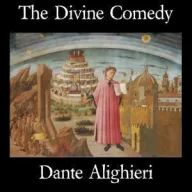 Divine ComedyDante Alighieri12 óra 23 perc
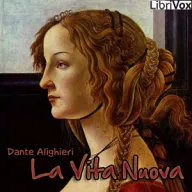 Vita NuovaDante Alighieri2 óra 13 perc
 Divina CommediaDante Alighieri10 óra 56 perc
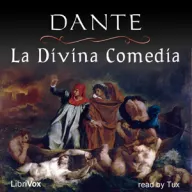 Divina ComediaDante Alighieri12 óra 25 perc
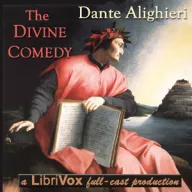 Divine Comedy (version 2 Dramatic Reading)Dante Alighieri13 óra 4 perc
 RimeDante Alighieri4 óra 11 perc
 Divina Commedia - L'InfernoDante Alighieri5 óra 5 perc
 ConvivioDante Alighieri9 óra 15 perc
