
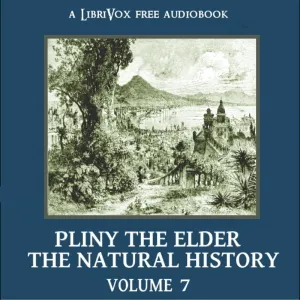
Over dit boek
Naturalis Historia (Latin for "Natural History") is an encyclopedia published circa AD 77-79 by Pliny the Elder. It is one of the largest single works to have survived from the Roman empire to the modern day and purports to cover the entire field of ancient knowledge, based on the best authorities available to Pliny. The work became a model for all later encyclopedias in terms of the breadth of subject matter examined, the need to reference original authors, and a comprehensive index list of the contents. The scheme of his great work is vast and comprehensive, being nothing short of an encyclopedia of learning and of art so far as they are connected with nature or draw their materials from nature. The work divides neatly into the organic world of plants and animals, and the realm of inorganic matter, although there are frequent digressions in each section. He is especially interested in not just describing the occurrence of plants, animals and insects, but also their exploitation (or abuse) by man, especially Romans. The description of metals and minerals is particularly detailed, and valuable for the history of science as being the most extensive compilation still available from the ancient world.
This seventh and last volume includes books thirty one to thirty seven, covering the following subjects:
Book 31 - The remedies derived from the aquatic productions
Book 32 - Remedies derived from the aquatic animals
Books 33 and 34 - The natural history of metals
Book 35 - An account of paintings and colours
Book 36 - The natural history of stones
Book 37 - The natural history of precious stones. - Summary by Leni
Hoofdstukken
Het volgende hoofdstuk begint vanzelf. Waar je was, onthoudt deze browser.
- 1Book 31, Chapters 1 to 15. Remarkable facts connected with water. The different properties of water. Remedies derived from water. Curative waters. Salt and bitter waters.15:42 · voorgelezen door Okiemou12
- 2Book 31, Chapters 16 to 32. Marvellous facts connected with water. Method of searching for water. The method of conveying water.39:15 · voorgelezen door Okiemou12
- 3Book 31, Chapters 33 to 42. The uses of sea-water. Thalassomeli and hydromeli. Various kinds of salt. Properties of salt. Flower of salt.26:17 · voorgelezen door Okiemou12
- 4Book 31, Chapters 43 to 47. Garum. Alex. The nature of salt. Nitrum. Sponges. Summary. Roman Authors Quoted. Foreign Authors Quoted.34:10 · voorgelezen door kgsaturn
- 5Book 32, Chapters 1 to 12. Remedies from aquatic animals. The torpedo. The sea-hare. Properties of fishes. Corals. Pastinaca. Galeos. Sur-mullet.22:20 · voorgelezen door Lector1
- 6Book 32, Chapters 13 to 22. Remedies from amphibious animals. Remedies for poisons and stings. Remedies from frogs, crabs, oysters and sea-weed.36:16 · voorgelezen door Christine Rottger
- 7Book 32, Chapters 23 to 32. Remedies for alopecy, diseases of the eyes and ears, tooth-ache, spots on the face, scrofula, coughs and diseases of the chest, pains in the liver and sides, diseases of…29:32 · voorgelezen door ingridluo
- 8Book 32, Chapters 33 to 47. Remedies for the intestines, the generative organs, remedies for the gout, epilepsy, lethargy, burns, diseases of the sinews, ulcers, warts. Depilatories.27:34 · voorgelezen door Larry Wilson
- 9Book 32, Chapters 48 to 54. Remedies for diseases of infants. Preventing intoxication. Aphrodisiacs. Other aquatic productions. Names of fishes. Summary, Roman authors quoted. Foreign authors quoted.17:53 · voorgelezen door Rapunzelina
- 10Book 33, Chapters 1 to 6. Metals. Gold. The origin of gold rings.The right of wearing gold rings.26:38 · voorgelezen door Adrian Stephens
- 11Book 33, Chapters 7 to 12. The decuries of the judges. The equestrian order. Gifts of gold and silver. Crowns of gold. Uses made of gold by females.13:43 · voorgelezen door Adrian Stephens
- 12Book 33, Chapters 13 to 21. Coins of gold, silver and copper. Man's cupidity for gold. Gilding. How gold is found.33:41 · voorgelezen door kgsaturn
- 13Book 33, Chapters 22 to 35. Orpimentum. Electrum. Statues of gold. Chrysocolla. Silver. Quicksilver. Stimmi, alabastrum, larbasus, scoria of silver.29:16 · voorgelezen door Adrian Stephens
- 14Book 33, Chapters 36 to 46. Minium. Cinnabaris. Gilding with silver. Testing silver and gold. MIrrors. Egyptian silver.19:19 · voorgelezen door Adrian Stephens
- 15Book 33, Chapters 47 to 58. Immense wealth. Voluntary contributions. Luxury and frugality. Silver plates. Statues of silver. Caeruleum. Summary, Roman authors quoted. Foreign authors quoted.30:19 · voorgelezen door Adrian Stephens
- 16Book 34, Chapters 1 to 8. Brass, copper.12:06 · voorgelezen door SoundsLikeJack
- 17Book 34, Chapters 9 to 18. Statues. Prices of statues. Colossal statues.24:41 · voorgelezen door SoundsLikeJack
- 18Book 34, Chapter 19. Most celebrated works in brass and their artists.30:52 · voorgelezen door SoundsLikeJack
- 19Book 34, Chapters 20 to 38. Copper. Medicinal properties of metals.33:18 · voorgelezen door SoundsLikeJack
- 20Book 34, Chapters 39 to 46. Iron. Ores. Live iron. Methods of preventing rust.13:15 · voorgelezen door SoundsLikeJack
- 21Book 34, Chapters 47 to 56. Lead. Molybdaena. Psimithium. Sandarach. Arrhenicum. Summary, Roman authors quoted. Foreign authors quoted.18:27 · voorgelezen door SoundsLikeJack
- 22Book 35, Chapters 1 to 10. Painting, portraits, monochrome paintings, earliest paintings, Roman paintings, foreign paintings21:12 · voorgelezen door Leon Harvey
- 23Book 35, Chapters 11 to 35. The art of painting, pigments, artificial colours, colours on wet coating, age of painting, contests of painting27:41 · voorgelezen door Leon Harvey
- 24Book 35, Chapter 36. Artists who painted with the pencil39:39 · voorgelezen door Rapunzelina
- 25Book 35, Chapters 37 to 42. Other kinds of painting. Encaustic painting. Colouring of tissues.27:10 · voorgelezen door ingridluo
- 26Book 35, Chapters 43 to 49. The art of modelling. Pottery. Brick walls.17:57 · voorgelezen door ingridluo
- 27Book 35, Chapters 50 to 59. Sulphur, Bitumen, Alumen, earths and their medicinal purposes. Summary, Roman authors quoted, foreign authors quoted.25:22 · voorgelezen door Rapunzelina
- 28Book 36, Chapters 1 to 4. Marble. Marble in public buildings. Marble columns. Sculptors in marble.31:19 · voorgelezen door William Bruce McFadden
- 29Book 36, Chapters 5 to 13. Marble slabs. The use of marble in Rome. Onyx and alabastrites. Lygdinus. Corallitic stones.16:46 · voorgelezen door Owlivia
- 30Book 36, Chapters 14 to 20. Obelisks. Works in Egypt. Pyramids. The Sphynx. The Pharos. Hanging Gardens.22:53 · voorgelezen door GreenMagik
- 31Book 36, Chapters 21 to 24. The Temple of Diana. Other temples. The fugitive stone. Marvellous buildings at Rome.24:24 · voorgelezen door Owlivia
- 32Book 36, Chapters 25 to 46. Magnets. Various kinds of stones and their medicinal uses.28:12 · voorgelezen door Owlivia
- 33Book 36, Chapters 47 to 70. Various kinds of silex. Stones used for buildings. Methods of building. Cisterns. Various kinds of sand. Plaster for walls. Columns. Gypsum. Pavements. Mosaic pavaments…28:53 · voorgelezen door Owlivia
- 34Book 37, Chapters 1 to 10. Jewels. Murrhine vessels. Crystals.28:00 · voorgelezen door Christine Rottger
- 35Book 37, Chapters 11 to 18. Amber. Precious stones. Smaragdus.40:21 · voorgelezen door Christine Rottger
- 36Book 37, Chapters 19 to 30. Tanos, beryls, opals, sardonyx, onyx, carbuncles, sandastros, lychnis, carchedonia.27:56 · voorgelezen door Christine Rottger
- 37Book 37, Chapters 31 to 50. Sarda, topazos, sapphiros, amethystos, chrysolitos, chryselectrum, asteria, astrobolos.25:57 · voorgelezen door Christine Rottger
- 38Book 37, Chapters 51 to 62. Several varieties of precious stones.33:13 · voorgelezen door Christine Rottger
- 39Book 37, Chapters 63 to 77. Several varieties of precious stones. The methods of testing precious stones. A comparative view of Nature as she appears in different countries. The comparative values…31:41 · voorgelezen door Christine Rottger
Misschien ook iets voor jou
 Boys' and Girls' Pliny Vol. 2Pliny the Elder, John S. White2 u 35 min
 Boys' and Girls' Pliny Vol. 1Pliny the Elder, John S. White2 u 6 min
 Boys' and Girls' Pliny Vol. 3Pliny the Elder3 u 3 min
 Boys' and Girls' Pliny Vol. 4Pliny the Elder, John S. White2 u 39 min
 Natural History Volume 4Pliny the Elder16 u 27 min
 Natural History Volume 5Pliny the Elder11 u 46 min
 Natural History Volume 2Pliny the Elder14 u 2 min
 Natural History Volume 3Pliny the Elder11 u 56 min


