
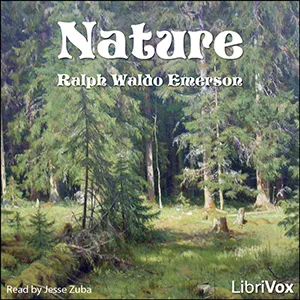
About this book
First published anonymously in 1836, Nature marks the beginning both of Emerson’s literary career and the Transcendentalist movement. Asking why his generation “should not also enjoy an original relation to the universe,” Emerson argues that “Man is a god in ruins” who might yet be redeemed by the renewal of harmony with nature. Encompassing themes that would preoccupy him for years to come, including the repressive force of social routine, the divinity of nature, and the creative potential of the individual, Nature reflected recent developments in European philosophy and literature even as it pushed American artists to break new ground. The book’s initial reception was mixed, but it influenced members of Emerson’s circle, including such luminaries as Henry David Thoreau and Margaret Fuller, and it would go on to inspire the work of writers ranging from Walt Whitman and Friedrich Nietzsche to Robert Frost and Ralph Ellison. - Summary by Jesse Zuba
Chapters
The next chapter starts by itself. Your place is remembered in this browser.
- 1Introduction4:31 · read by Jesse Zuba
- 2Chapter I - Nature6:46 · read by Jesse Zuba
- 3Chapter II - Commodity3:51 · read by Jesse Zuba
- 4Chapter III - Beauty14:25 · read by Jesse Zuba
- 5Chapter IV - Language16:24 · read by Jesse Zuba
- 6Chapter V - Discipline17:02 · read by Jesse Zuba
- 7Chapter VI - Idealism20:24 · read by Jesse Zuba
- 8Chapter VII - Spirit7:22 · read by Jesse Zuba
- 9Chapter VIII - Prospects17:14 · read by Jesse Zuba
You may also like
 Essays, First SeriesRalph Waldo Emerson8 h 28 min
 Three Great Virtues - Three Essays by EmersonRalph Waldo Emerson3 h 31 min
 Essays, First Series (version 2)Ralph Waldo Emerson8 h 24 min
 NatureRalph Waldo Emerson1 h 52 min
 Representative MenRalph Waldo Emerson7 h 5 min
 RhodoraRalph Waldo Emerson9 min
 Snow-StormRalph Waldo Emerson32 min
 ApologyRalph Waldo Emerson32 min
