Sobre este libro
The word Upanishad (upa-ni-shad) consists of, "Upa" means "near;" "ni" means "down;" "shad" means "to sit." Thus, Upanishad is to sit down near the teacher to discuss, learn, practice, and experience. There are some 200 or more Upanishads. Some are lost and are only known about because of being referenced in other Upanishads.
Most of the Upanishads were kept secret for centuries, only passed on to others orally in the form of Shlokas (a category of verse line developed from the Vedic Anustubh meter).
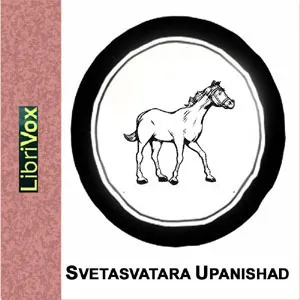
Shvetashvatara Upanishad is embedded in Yajurveda. The name "Shvetashvatara" has the compound Sanskrit root Shvetashva (श्वेताश्व, Shvet + ashva), which literally means "white horse" and "drawn by white steeds". The Shvetashvatara Upanishad opens with metaphysical questions about the primal cause of all existence, its origin, its end, and what role if any did time, nature, necessity, chance, and the spirit had as primal cause? It then develops its answer. The chronology of Shvetashvatara Upanishad is uncertain and contested. It was probably composed in the 5th to 4th century BCE.
The 11 principal Upanishads to which Sankara appeals in his great commentary on the Vedanta-Surtras are: Chandogya, Talavakara or Kena, Aitareya, Kaushitaki, Vajasaneyi or Isha, Katha, Mundaka, Taittirtiyaka or Taittiriya, Brihadaranyaka, Svetasvatara, and Prasna. They are also called the 11 classical Upanishads or the fundamental Upanishads of the Vedanta Philosophy. Apart from these, Maitrayana-Brahmana-Upanishad is also considered as an important Upanishad.
The Upanishadic literature is not a religious scripture and is free from dogma and doctrines. It is not a part of any religion but is a philosophy for all times and for all. German philosopher Arthur Schopenhauer, impressed by the Upanishads, called the texts "the production of the highest human wisdom". Summary by Jothi
Capítulos
El siguiente capítulo empieza solo. Este navegador recuerda por dónde ibas.
- 1First Adhyaya7:35 · leído por Jothi Tharavant
- 2Second Adhyay5:53 · leído por Jothi Tharavant
- 3Fourth Adhyaya7:58 · leído por Jothi Tharavant
- 4Third Adhyaya6:51 · leído por Jothi Tharavant
- 5Fifth Adhyaya5:05 · leído por Jothi Tharavant
- 6Sixth Adhyaya8:01 · leído por Jothi Tharavant