
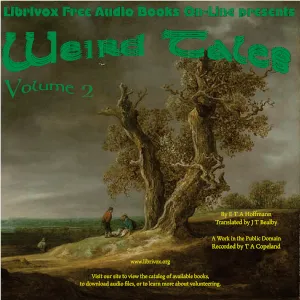
Σχετικά με αυτό το βιβλίο
Paradoxically, it is variety that unites the tales you are about to read. They take place in widely separated countries and historical periods, and their outcomes—fortunate or tragic—cannot always be predicted with accuracy. The characters too speak with varied voices; even the narrative voice is not uniform, for the author often frames story within a story, using a character in one tale to narrate another.
The reader will sometimes feel as though the author is extending an invitation to enter his workshop to observe him at his trade and admire his craftsmanship. Narrative techniques, for instance, such as suspending the detailed account of events in order to summarize what follows or occasionally interrupting the story line to offer a bit of background or exposition, are introduced by referring to “the indulgent reader,” “my kindly reader,” or even (once) a direct address: “dear reader.” This device is common to much Romantic literature, but Hoffmann’s self-conscious use of it renders it satirical.
He frequently shifts from seriousness to mockery, characterized by an arch tone as he knowingly overworks Romantic clichés like apostrophes to absent or non-sentient entities and especially hyperbole, which he mercilessly burlesques. Yet his mercurial sensibility can then shift in a moment back into the serious use of Romantic conventions: overwrought descriptions, pathetic fallacies, sudden reversals of fortune, unlikely coincidences, gloomy intimations of the cruelty of destiny, dark secrets, and men fulsomely unburdening themselves of their inmost feelings, not without tears. He even takes up the age-old theme of friendship vs. romantic love and their rival claims to be the nobler sentiment. In short, although clearly an early Romantic himself, Hoffmann nevertheless shares Jane Austen’s rational criticism of the Romantic temperament, “sentimental” being a term of reproach in this volume. - Summary by Thomas Copeland
Κεφάλαια
Το επόμενο κεφάλαιο ξεκινά μόνο του. Αυτός ο browser θυμάται πού σταματήσατε.
- 1Section 1: The Doge and Dogess, part 144:49 · ανάγνωση: Thomas A. Copeland
- 2Section 2: The Doge and Dogess, part 246:48 · ανάγνωση: Thomas A. Copeland
- 3Section 3: The Doge and Dogess, part 344:39 · ανάγνωση: Thomas A. Copeland
- 4Section 4: Master Martin the Cooper, part 146:19 · ανάγνωση: Thomas A. Copeland
- 5Section 5: Master Martin the Cooper, part 252:48 · ανάγνωση: Thomas A. Copeland
- 6Section 6: Master Martin the Cooper, part 359:38 · ανάγνωση: Thomas A. Copeland
- 7Section 7: Mademoiselle de Scudéry, part 148:19 · ανάγνωση: Thomas A. Copeland
- 8Section 8: Mademoiselle de Scudéry, part 244:25 · ανάγνωση: Thomas A. Copeland
- 9Section 9: Mademoiselle de Scudéry, part 349:49 · ανάγνωση: Thomas A. Copeland
- 10Section 10: Mademoiselle de Scudéry, part 444:52 · ανάγνωση: Thomas A. Copeland
- 11Section 11: Gambler's Luck, part 137:34 · ανάγνωση: Thomas A. Copeland
- 12Section 12: Gambler's Luck, part 239:33 · ανάγνωση: Thomas A. Copeland
- 13Section 13: Master Johannes Wacht, part 150:15 · ανάγνωση: Thomas A. Copeland
- 14Section 14: Master Johannes Wacht, part 235:17 · ανάγνωση: Thomas A. Copeland
- 15Section 15: Master Johannes Wacht, part 342:49 · ανάγνωση: Thomas A. Copeland
Μπορεί να σας αρέσει επίσης
 Klein Zaches, genannt ZinnoberE. T. A. Hoffmann4 ώ. 22 λεπ.
 Elixiere des TeufelsE. T. A. Hoffmann12 ώ. 24 λεπ.
 Casse-noisette et le roi des sourisE. T. A. Hoffmann2 ώ. 8 λεπ.
 NachtstückeE. T. A. Hoffmann14 ώ. 8 λεπ.
 Weird TalesE. T. A. Hoffmann23 ώ. 22 λεπ.
 Fräulein von ScuderiE. T. A. Hoffmann3 ώ. 19 λεπ.
 Great Ghost StoriesEdward Bulwer-Lytton, Amelia Ann Blanford Edwards, Joseph Lewis French, Théophile Gautier, Thomas Hardy, E. T. A. Hoffmann, M. R. James, Frederick Marryat13 ώ. 11 λεπ.
 goldne TopfE. T. A. Hoffmann3 ώ. 24 λεπ.