

Shownotes
ADHD Awareness Month 2026: What Actually Helps?This October, I'm putting community, real experiences and practical support at the heart of ADHD Awareness Month. There are live conversations, Instagram Lives, podcast events and ways for you to share what actually helps in your own life. Visit the Events page to see what’s happening and get involved.
Content note: This episode contains references to suicide and family bereavement. If you are struggling, please reach out to a trusted support resource.
In the UK, the Samaritans can be contacted on 116 123. In the US, the National Suicide Prevention Hotline is 1-800-273-8255. In Australia, the crisis support service Lifeline is on 13 11 14. Hotlines in other countries can be found here. You can also check out the Campaign Against Living Miserably here
What if the traits you've spent a lifetime apologising for are actually the source of your greatest ability?
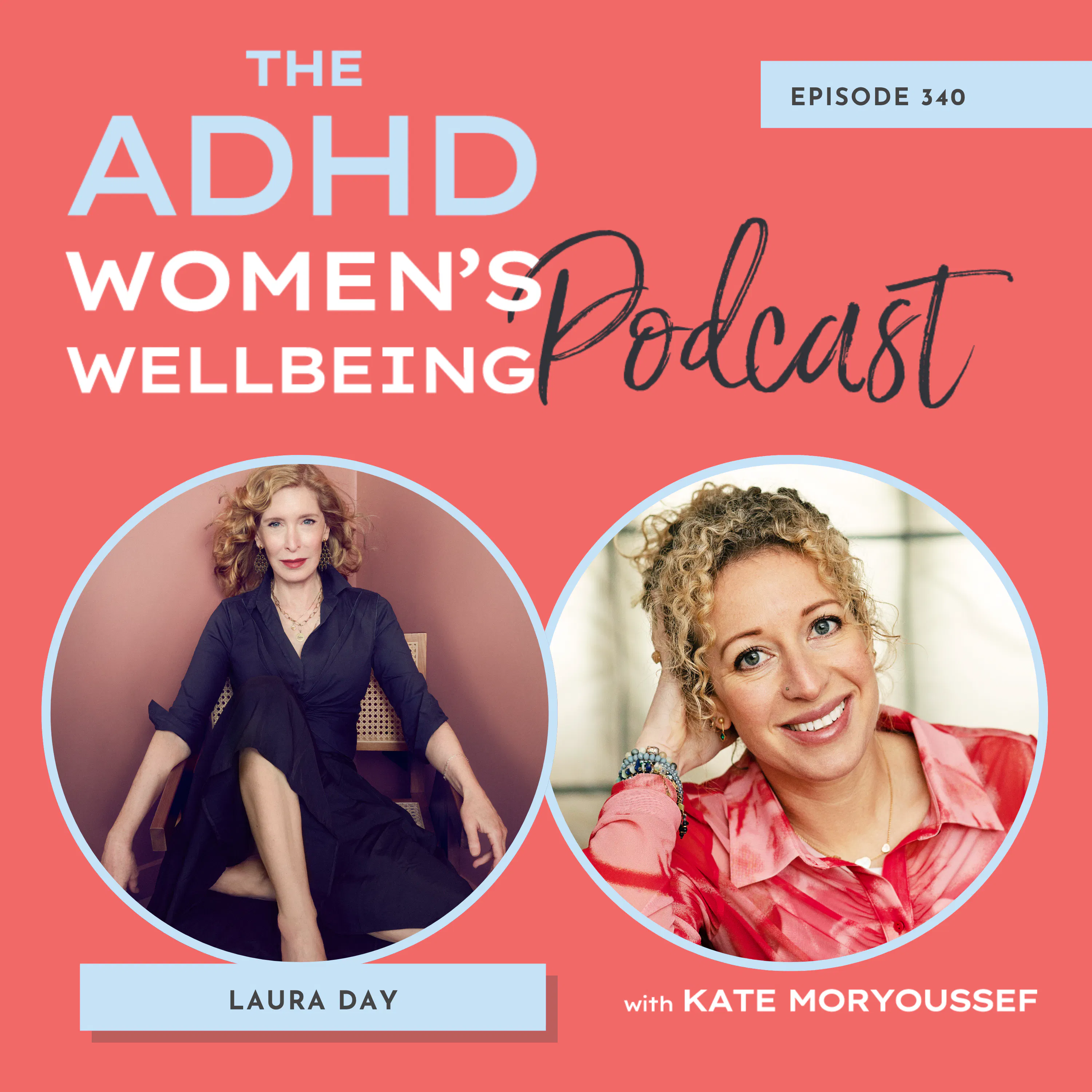
On this week's episode of The ADHD Women's Wellbeing Podcast, I'm joined by Laura Day, New York Times bestselling author, teacher and intuitive consultant who has spent four decades working with individuals and some of the world's largest companies to help them identify and achieve their goals.
Laura's new book, The Prism: Seven Steps to Heal Your Past and Transform Your Future, is the book she describes as an ADHD manual — a practical, evidence-informed framework for building the scaffolding that helps neurodivergent brains thrive. With two New York Times bestsellers to her name and a 40-year teaching community, Laura is also someone who has lived with ADHD her entire life, and this conversation is one of the most honest, warm and genuinely surprising I have had on the podcast.
We talk about Laura's childhood in a household where neurodivergence was everywhere but unnamed, why girls of her generation were never allowed to act out and what that suppression cost them, how she built a career advising billion-dollar companies using her intuitive mind, and why the ADHD brain is uniquely suited to intuition, just not always in the way we expect.
In this episode, we cover:
Laura's diagnosis at 10 or 11, and why girls of her generation were never treated
Growing up in a household where neurodivergence showed up in multiple family members, often with devastating consequences
How Laura used survival, focus and necessity as her prosthetic scaffolding before she understood her own neurology
Why the ADHD brain is the intuitive brain, and how to make that work for you rather than against you
Why intuition is not something you tap into but something that is always downloading, and how to structure it usefully
The difference between the voice of fear and the voice of intuition, and why documentation matters more than belief
How Laura advises billion-dollar companies using intuitive methods, and why business and science do what works regardless of belief
Why Laura says you are your own worst intuitive, and why community-based intuitive practice…


