

Course 46 - CompTIA Cybersecurity Analyst | Episode 26: From Networks and Hosts to Security Analytics
· 15 min
Show notes
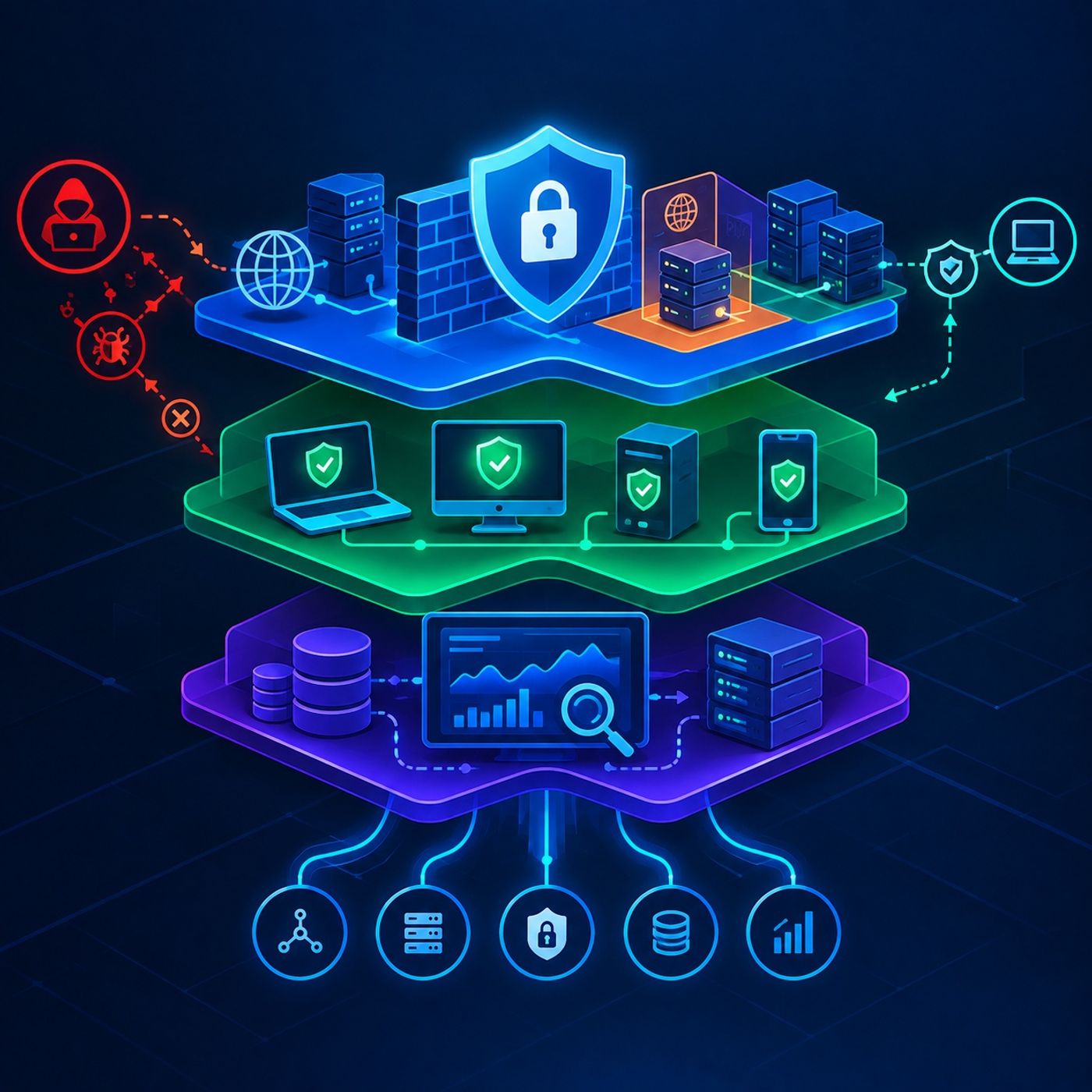
Building a Multi-Layered Cybersecurity Defense: Network, Host, and Security AnalyticsEpisode OverviewThis episode explores how organizations build an end-to-end cybersecurity defense by combining network segmentation, host and endpoint hardening, and centralized security analytics.The episode demonstrates how controls at different layers reinforce one another: network segmentation limits exposure and lateral movement, hardened hosts reduce exploitable weaknesses, and centralized security telemetry provides the visibility needed to detect, investigate, and respond to suspicious activity.Key Topics Covered1. Layered Network Design and Segmentation
• Network Segmentation: Divide enterprise environments into logical security zones to reduce unnecessary connectivity, limit lateral movement, and contain potential compromises.
• Security Zones: Separate systems according to their function, trust level, exposure, and data sensitivity.
• Compliance-Sensitive Environments: Use segmentation to isolate systems handling regulated or sensitive information, such as payment-card data, when the architecture is properly designed and validated.
• DMZ Architecture: Examine designs that place publicly accessible services in a dedicated network zone between less-trusted and more-trusted environments.
• Firewall Designs: Compare single multi-interface firewall architectures with designs that use multiple firewalls or security boundaries to provide additional separation.
• Traffic Optimization: Apply segmentation and carefully designed traffic paths to control unnecessary communication while maintaining required business connectivity.
2. Host and Endpoint SecurityProtecting individual systems provides another critical layer of defense when network controls are bypassed or an endpoint itself becomes the initial attack vector.Key controls include:
• Strong Authentication and MFA: Reduce the risk associated with compromised passwords and unauthorized account access.
• Data-at-Rest Encryption: Protect sensitive information stored on endpoints and servers if storage media are lost, stolen, or accessed without authorization.
• File Integrity Monitoring: Use cryptographic hashes and integrity-monitoring mechanisms to identify unauthorized changes to important files and configurations.
• Patch Management: Keep operating systems, applications, firmware, and security components appropriately updated according to risk and operational requirements.
• System Hardening: Disable unnecessary services, restrict privileges, remove insecure configurations, and apply appropriate security baselines.
• Configuration Management: Maintain consistent and controlled configurations across servers, desktops, and mobile or specialized endpoints.
• Layered Endpoint Protection: Combine preventive, detective, and response capabilities rather than relying on a single security product.
3. Security Data Analytics and Log IntelligenceSecurity controls are significantly more effective when organizations…
Website: spreaker.com


