

Can AI Save Creators Time Without Replacing Their Judgment? | Laura Burkhauser #690
· 49 min. · Episode 690
Episodebeskrivelse
WATCH OR LISTEN · EPISODE 690
Watch video | Listen to audio | Read show notes
Watch video
Prefer audio? Listen here.
Open audio in a new window | Download audio
Follow the audio podcast: Apple Podcasts | Spotify | RSS
Show notes
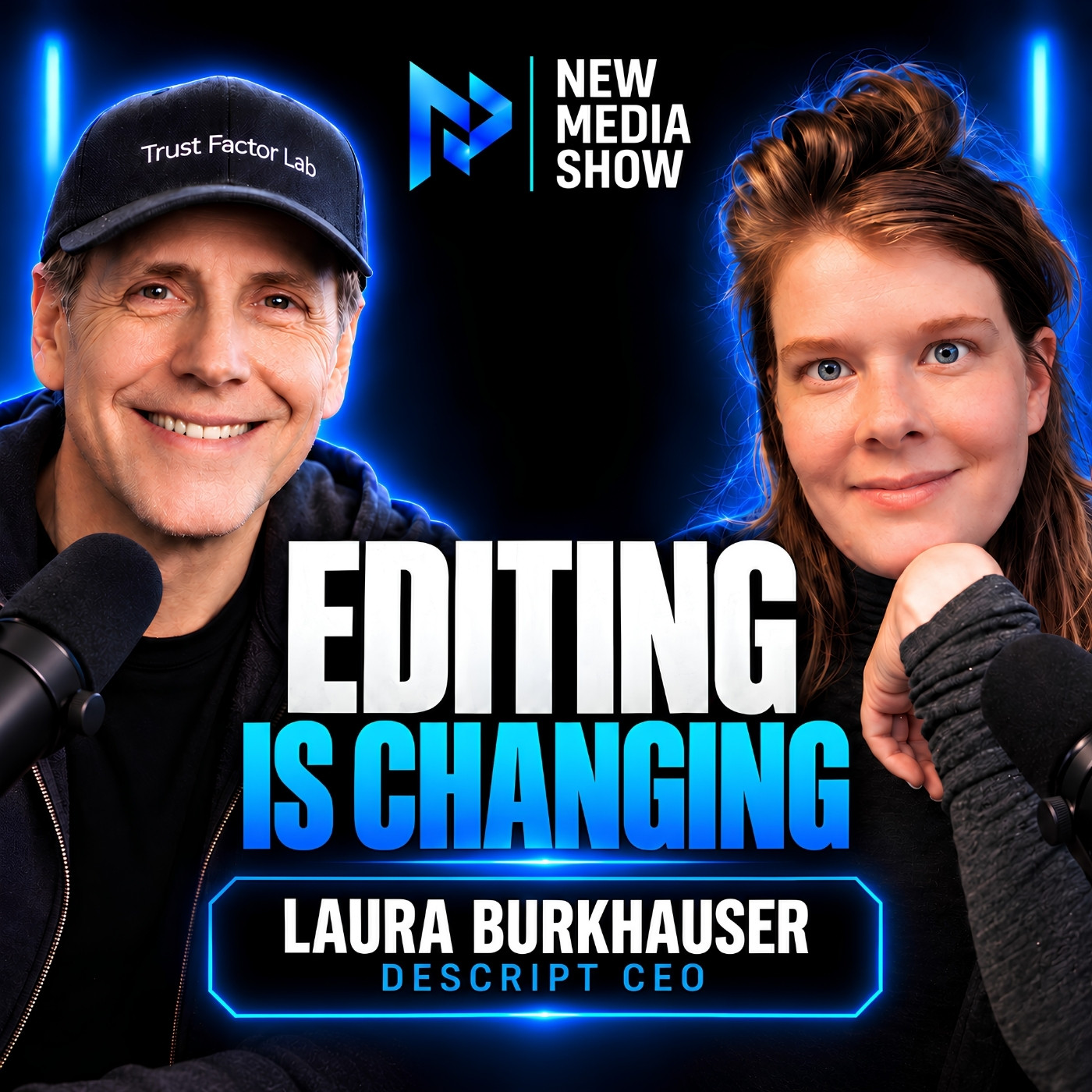
In New Media Show #690, Rob Greenlee talks with Laura Burkhauser, CEO of Descript, about AI editing, creative direction and the decisions that make a creator’s work distinctive. The conversation asks what becomes more valuable about human judgment as production tools become more capable.
Three practical takeaways
• Build an audience: give people a recognizable perspective and a useful story. More effects or faster output do not, by themselves, give an audience a reason to return.
• Earn trust: review an automated edit for meaning and context. Laura argues that thoughtful editing can clarify a conversation; preserving authenticity still requires human decisions.
• Grow a media business: choose production work that supports the audience and business you want to build. The discussion considers community support, relevant sponsors and media that helps a professional demonstrate expertise.
Try this: Choose one repetitive editing task for AI assistance. Write down the intended story, compare the automated result with the original, and record the time saved and corrections needed before publishing. This is an editorial exercise informed by the conversation, not a promise of a particular result.
Editing as craft, and editing as a production task
Laura distinguishes between creators whose art is editing and creators whose primary art is storytelling. An experienced editor may want precise control over individual choices. A storyteller may want help removing the technical obstacles between an idea and an audience. Those needs call for different workflows.
Rob and Laura explore the shift toward directing AI tools. A useful prompt depends on knowing the intended result, communicating it clearly and judging what the tool produces. Laura’s point is that a creator’s perspective remains important even when the technical work becomes easier.
Reduce tool friction while keeping human judgment
Laura describes an approach that reduces repetitive production work while leaving the creator responsible for the vision and story. Rob connects that to his experience assembling radio programs manually and using newer editing tools.
The discussion also considers the expectations AI companies create. Claims about effortless production can overlook the creative decisions that still need attention. The practical question is which work should be automated and which choices deserve deliberate human review.
Authenticity depends on the choices behind the edit
Rob asks whether an unedited recording is necessarily more authentic than an edited conversation. Laura argues that editing can make meaning easier to understand. A close-up or reaction shot can clarify an emotional moment, provided it serves the conversation rather than changing…
Website: newmediashow.com


