
Consent in Orthodontics Should Be Individualised – PDP273
· 47 min · Episode 1
Episodebeskrivelse
🦷 Plaque Friday™ is here!
Get 20% off Protrusive Guidance Ultimate for as long as you stay, plus 7 days free to try it. That’s every masterclass, AskJaz, verifiable CPD on hundreds of podcast episodes, and our new live series Caries, Cracks and Contact Points with Dr Ronit Patel. Use code PF26 at checkout. Ends Monday 30 November, 11:59pm UK.
👉 https://protrusive.co.uk/plaquefriday
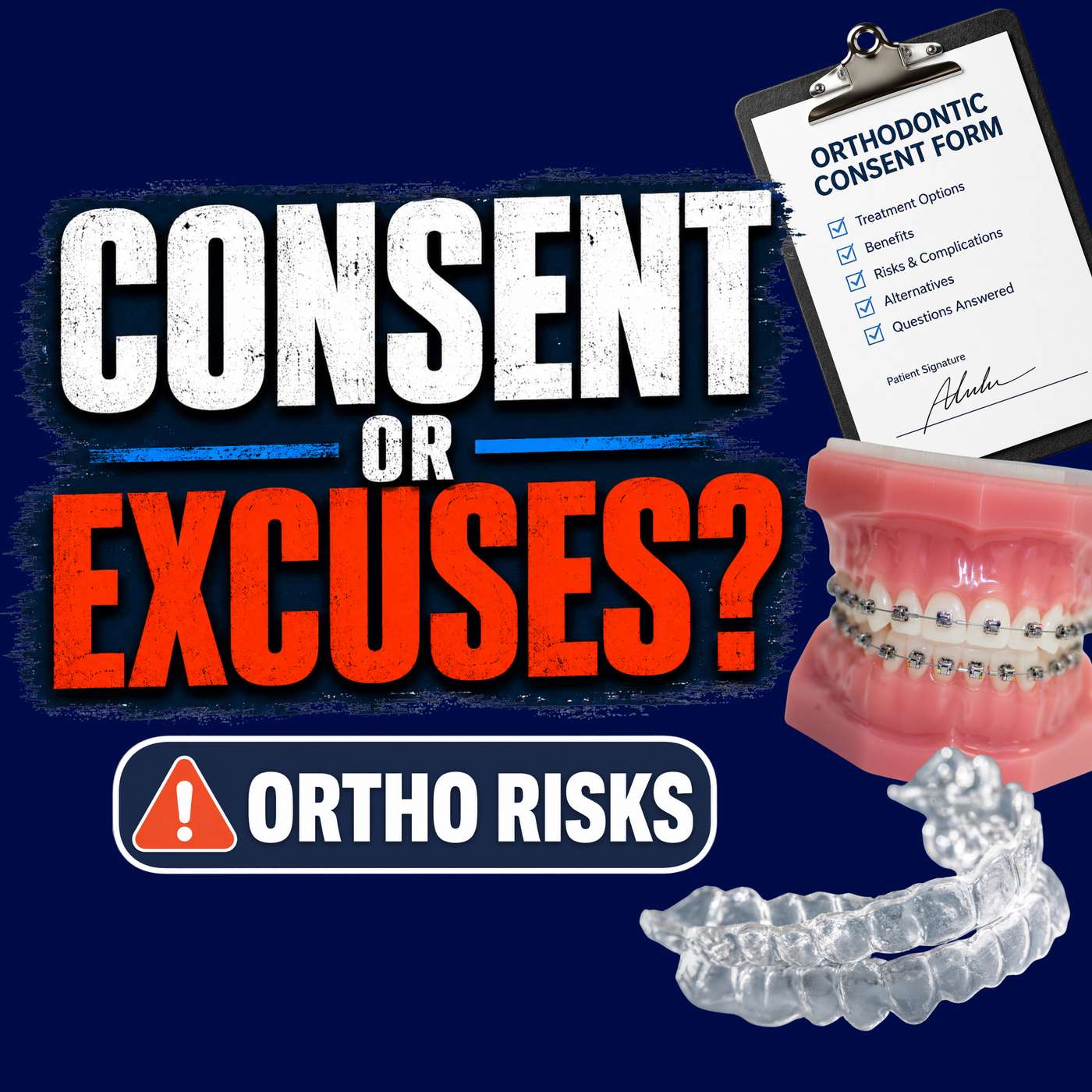
How good is your consent for orthodontics — really?
More adults are having ortho, and more GDPs are providing it. So which risks should you be discussing with every single patient — and which ones depend on the person in the chair?
When a case is heading for a big overjet or a tricky rotation, is that a conversation you have at the start, or one you scramble to explain halfway through?
And what actually makes a consent form legally valid — the signature, or everything around it?
This episode brings together two perspectives you don’t often hear in the same room. Dr Zaid Esmailis a specialist orthodontist and founder of the Online Orthodontic Academy, who mentors GDPs through fixed and aligner cases. Dr Neel Jaiswal returns for the dento-legal view — he’s a dentist and the founder of Professional Dental Indemnity (PDI). Together with Jaz, they get very specific about what individualised consent looks like in practice, and how to build a process your patients remember and a court respects.
https://youtu.be/YvsiIiX1Q1w
Watch PDP273 on YouTube
Protrusive Dental Pearl: Make Your Patient Feel Unique
It might be your 100th, 500th or 1,000th case — but for the patient in the chair, this is a significant event. Never forget that. A routine extraction is routine for you; for them it’s a big deal, and remembering that makes you a better communicator.
To make a specific risk stick, make the patient feel unique. Point to their OPG: “Your sinus here is actually really interesting,” or “Did you know your roots are unusually long?” Patients remember a risk framed as if they’re a special case far better than a generic warning. Make it personal, and the consent becomes memorable.
What You’ll Take From This Episode
The whole episode turns on one idea: generic, templated consent is no longer defensible — the skill is individualising the form to the patient in front of you. Premium members get the full breakdown; here’s the shape:
• The layers of valid consent — consent is like an onion; a signed form and a documented conversation each cover a gap the other leaves open.
• Individualising risk from the records — how the OPG and photos turn a generic warning (resorption, devitalisation, recession, relapse) into a patient-specific one.
• The two-appointment consent flow — records, individualised risks, thinking time, and why you sign or initial every line.
• The Class II Div 2 overjet trap — the case that looks like simple crowding and ends in a big overjet, and how to consent for it before you start.
• When to treat, add an option, or refer — the GDC line on offering all options, and…
Nettsted: share.transistor.fm

