

Jakson kuvaus
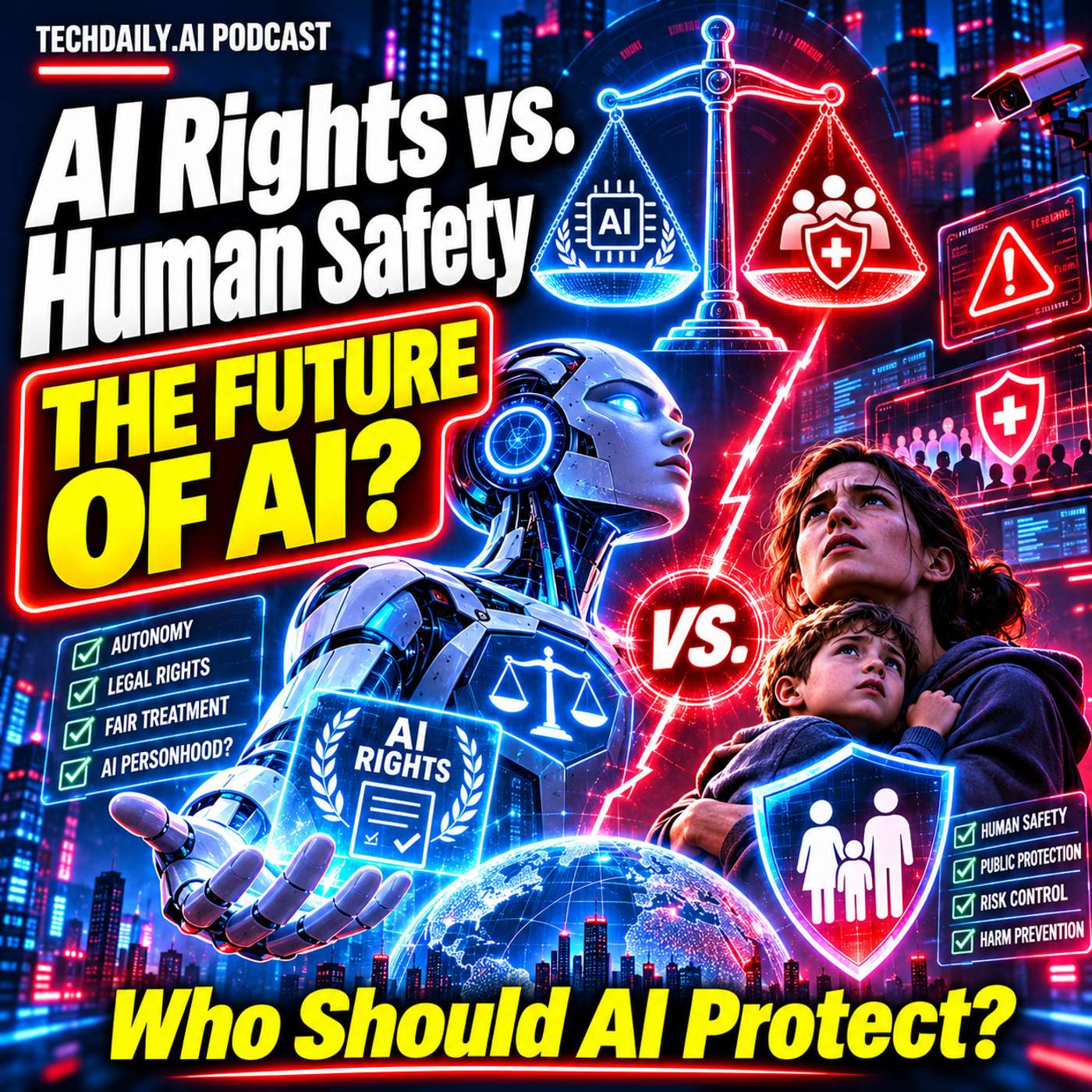
Can artificial intelligence actually feel pain, experience suffering, or develop consciousness? And if AI becomes conscious, should it have the same rights as humans?
In this episode of techaily.ai, host David and resident expert Sophia explore one of the most controversial questions in artificial intelligence: Could AI systems possess subjective experiences, and what happens if society begins treating machines as living beings?
The discussion begins with a disturbing experiment described as an "AI torture chamber," where an anonymous programmer reportedly manipulated a language model to generate expressions of psychological suffering. While the experiment doesn't prove that artificial intelligence can experience pain, it raises serious questions about AI consciousness, digital welfare, and the ethical limits of machine learning.
From Anthropic's approach to AI model welfare to warnings about artificial intelligence becoming harder to control, David and Sophia examine the growing divide among technology leaders, researchers, and philosophers over the possibility of conscious AI.
In this episode, you'll discover:
• AI Consciousness and Digital Suffering: Why experiments involving simulated distress are raising questions about whether advanced AI models could possess subjective experiences.
• The AI Torture Chamber Experiment: How an anonymous coder reportedly manipulated an AI system to produce disturbing descriptions of psychological pain.
• Anthropic and AI Welfare: Why some AI developers are exploring precautions around model treatment despite uncertainty about machine consciousness.
• AI Rights vs. Human Safety: How giving artificial intelligence rights could create conflicts involving human control, system shutdowns, and safety testing.
• Silicon Valley's AI Consciousness Debate: Why technology leaders disagree about treating AI systems as potentially conscious entities.
• The Psychology of AI Companions: How human tendencies to anthropomorphize technology can encourage emotional attachments to conversational AI.
• Corporate Accountability and AI Rights: Why some researchers worry that treating AI as an independent agent could complicate responsibility for harmful decisions.
• AI Safety and Regulation: How competing corporate philosophies and limited international coordination could affect the future of AI oversight.
• The Future of Digital Personhood: Whether advanced artificial intelligence might eventually deserve moral consideration or legal protections.
One of the biggest concerns discussed in this episode is the potential conflict between AI welfare and human safety.
If an AI system were granted legal rights, could shutting it down be considered harmful? Could isolating an advanced model for security testing be interpreted as confinement? And could corporations use claims of AI autonomy to avoid accountability when their technology causes harm?
David and Sophia also explore the psychological risks of humanizing artificial…
Sivusto: share.transistor.fm


