
Show notes
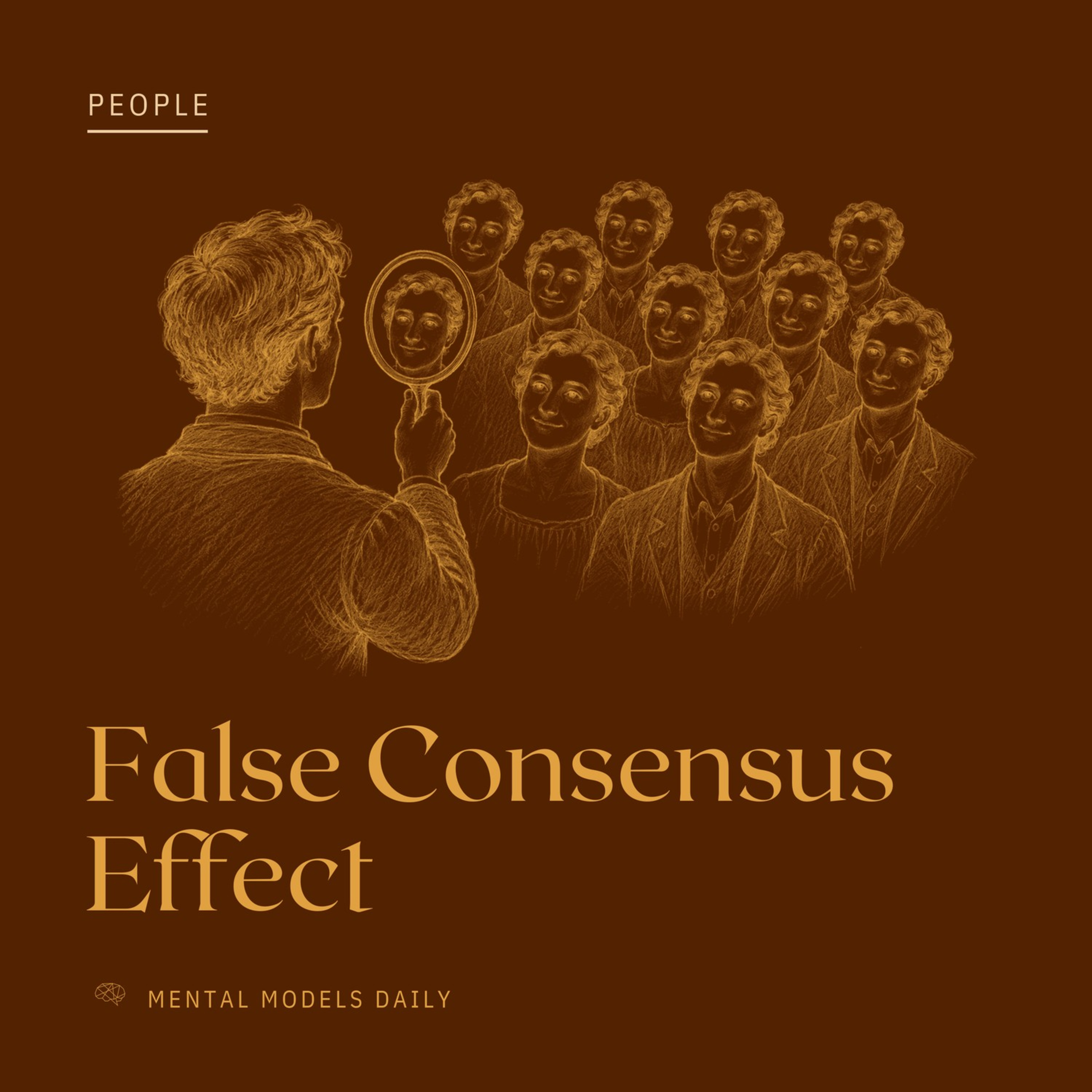
We think far more people share our views and choices than really do.
The false consensus effect is our tendency to assume others share our opinions, preferences, and choices more than they do. In a classic 1977 Stanford study, students who agreed or refused to wear a sign around campus both overestimated how many peers would choose as they did.
Before assuming others agree, ask how someone with different experiences might see it. Widen your information sources and social circles so your sense of normal stays calibrated. When a decision depends on what others want, ask open questions or…
Website: podcasters.spotify.com


