
Epizódjegyzetek
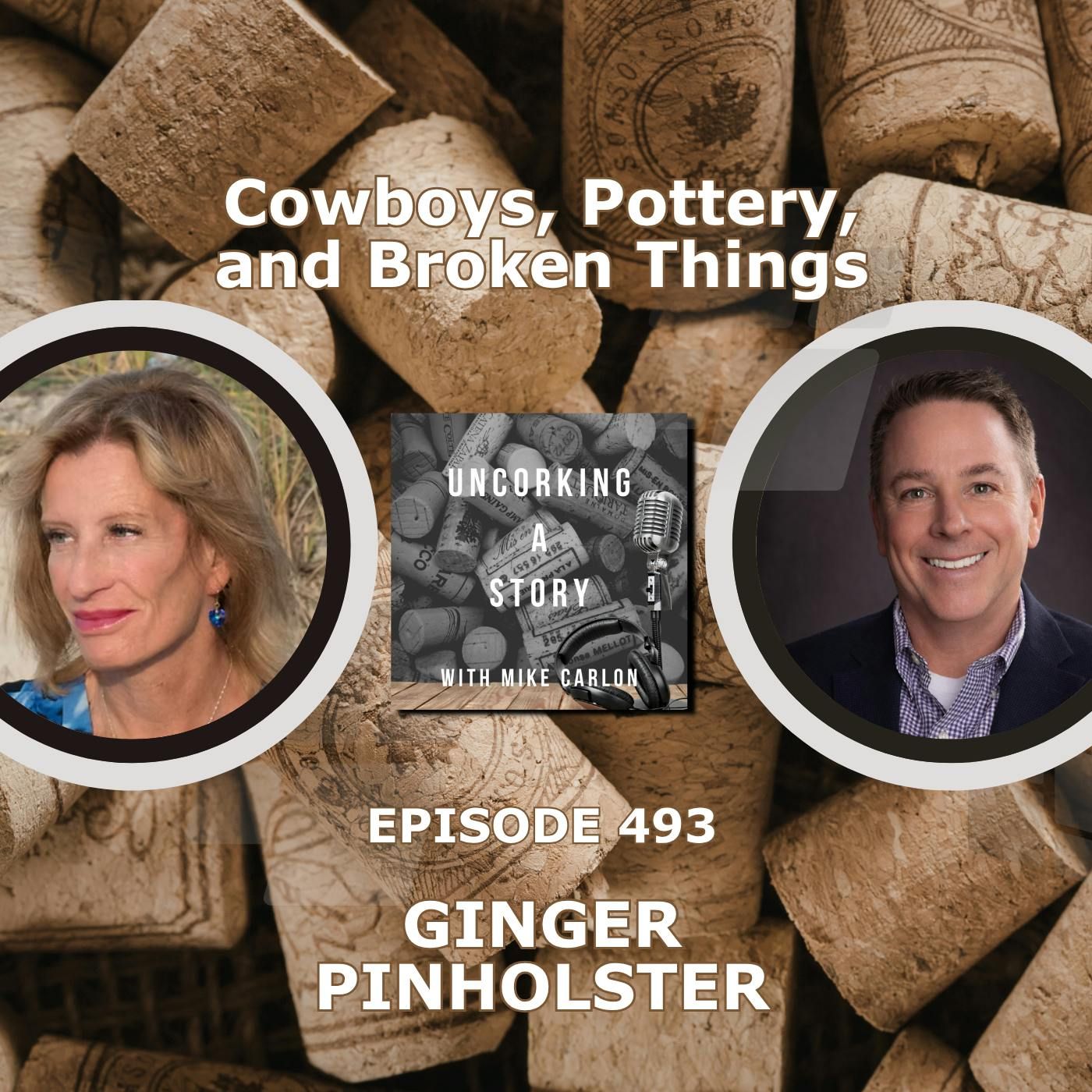
"Good writing should help readers see their own experiences and feel their own emotions through the characters and ideally understand that they are not alone and that they can prevail, survive, triumph even. And the way that we do that is connection to other people." — Ginger Pinholster
ABOUT THIS EPISODE
Ginger Pinholster returns to Uncorking a Story to talk about her third novel, THE TRAIN TO SANTA FE. A Pushcart Prize nominee and former science writer who spent nearly four decades at institutions like AAAS and Embry-Riddle Aeronautical University, Ginger now splits her time between Florida's Ponce Inlet — where she volunteers with the Volusia Turtle Patrol — and Santa Fe, New Mexico. Her new book is a braided historical novel spanning three generations: a gifted sixteen-year-old Tewa potter who boards one of the first trains from Espanola to Santa Fe in the 1880s, her granddaughter Rose who's ninety-four and desperate to reclaim her stolen Native heritage, and a modern-day love story between a wounded veteran and a cowboy-hat-wearing orderly. Mike and Ginger talk about how a hot cowboy on a work trip inspired the book, the technical challenge of weaving multiple timelines together, using pottery as connective tissue between past and present, the healing power of landscape and community, and why broken things — pottery, bodies, hearts — can still become whole.
KEY TAKEAWAYS
1. Sometimes a story finds you. Ginger had already begun working on a Southwestern historical novel when a work trip to Santa Fe introduced her to a real-life cowboy who became the inspiration for her male protagonist, Jonah. The personal and the creative merged.
2. Connective tissue holds a braided novel together. Inspired by Sarah Penner's workshop on dual-timeline fiction (The Lost Apothecary), Ginger needed a physical artifact to link her timelines. Her anthropologist daughter pointed her toward New Mexico's indigenous pottery — and the structure clicked into place.
3. The railroad changed everything for Indigenous communities. The Chili Line Railroad brought opportunity but also exploitation: bisecting irrigation channels, replacing barter with cash currency, and transforming Native artwork for tourist consumption. Ginger imagines what happened to one young woman caught in that upheaval.
4. Broken things are a throughline. Broken pottery, a broken body, broken hearts — the novel keeps returning to the question of how we remain resilient and ultimately heal after trauma. For Ginger, the answer is always community.
5. Writing is healing. Newly divorced and sending a daughter off to college when she began the book, Ginger channeled her own sense of being adrift into Jemi — a wounded veteran who urgently wants to climb a mountain where she once felt whole.
6. Landscape is a character. The purple shawls falling over mountaintops, the luminous butterscotch of cottonwood trees — Ginger makes the physical setting integral to how her characters live and feel. She even…
Weboldal: uncorkingastory.com

