

Episodebeskrivelse
Three times since the 1970s, global imbalances have grown large. In the 1980s, the US trade deficit ballooned under Volcker's tight money and Reagan's tax cuts and military spending. In the 2000s, a global savings glut and then a US housing credit boom pushed the deficit to 6% of GDP. Today, the imbalances are back. The US current account deficit stood at 3.9% of GDP in 2025.
The policy medicine this time: tariffs.
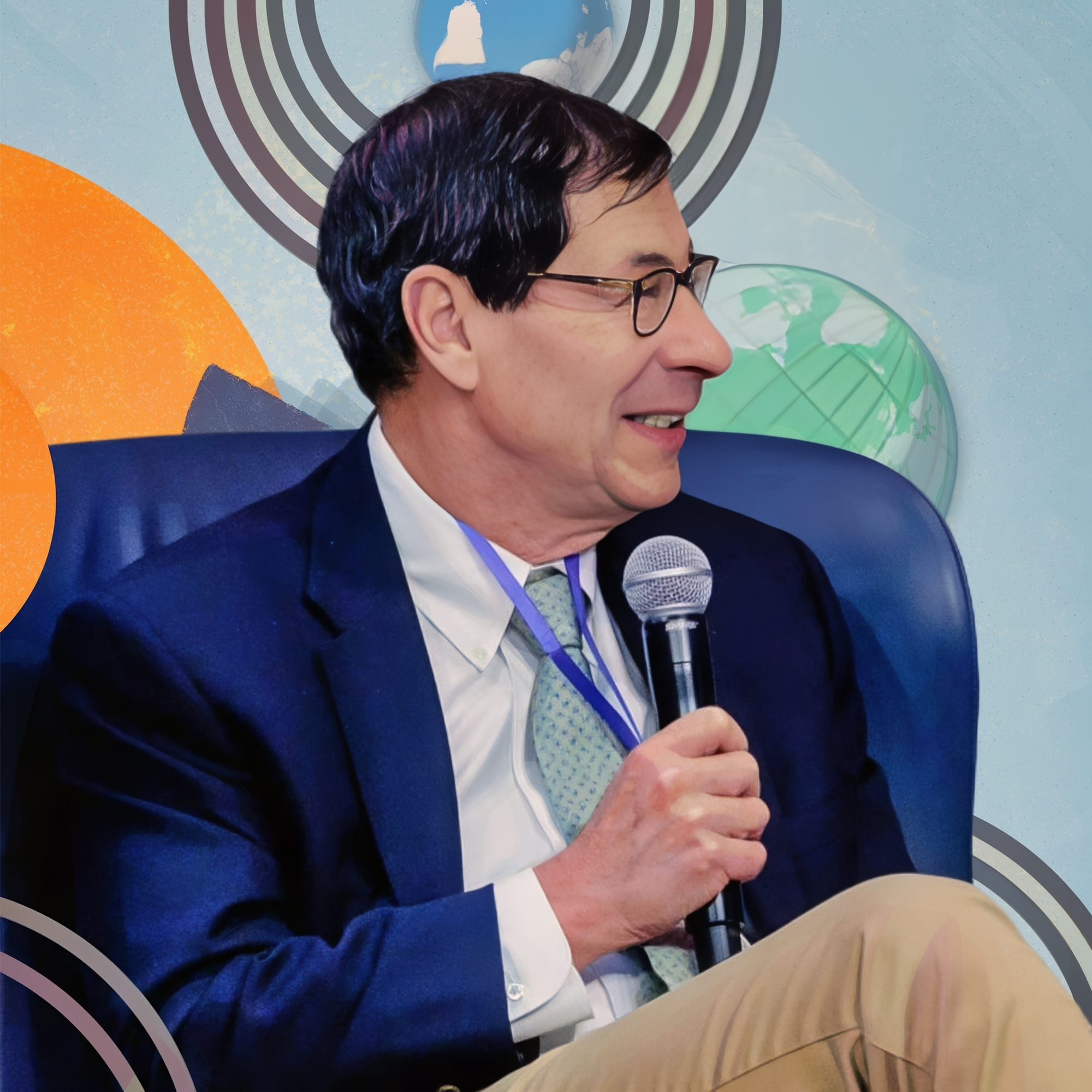
Maurice Obstfeld of the Peterson Institute for International Economics and CEPR has written a chapter in the fourth Paris Report, published jointly by CEPR and Bruegel, examining that history, how policymakers responded, and what it can tell us about the effectiveness of policy remedies in 2026. He tell Tim Phillips that blaming foreigners misdiagnoses the problem if the US saves too little and invests heavily. The gap has to be financed from abroad. Good policy for the new global imbalances would requires three actors to move together: fiscal consolidation in the US, stronger consumption in China, and more investment in Europe. All three would benefit, none are close to doing it. The longer the can is kicked, Obstfeld warns, the greater the risk that the resolution arrives the way it always has: not through policy, but through crisis.
The report discussed in this series of episodes:
Rey, Hélène, Beatrice Weder di Mauro, and Jeromin Zettelmeyer (eds). 2026. The New Global Imbalances. Paris Report 4. CEPR Press and Bruegel. Free to download at cepr.org.
The chapter discussed in this episode:
Obstfeld, Maurice. 2026. "Global imbalances redux." In Rey, Weder di Mauro, and Zettelmeyer (eds), The New Global Imbalances. Paris Report 4. CEPR Press and Bruegel.
To cite this episode:
Phillips, Tim, and Maurice Obstfeld. 2026. “Global imballances redux”, VoxTalks Economics (podcast).
Assign this as extra listening. The citation above is formatted and ready for a reading list or VLE.
About Paris Report 4
The fourth Paris Report, The New Global Imbalances, is a joint publication of CEPR and Bruegel. It was edited by Hélène Rey (London Business School and CEPR), Beatrice Weder di Mauro (Geneva Graduate Institute and CEPR, and President of CEPR), and Jeromin Zettelmeyer (Bruegel and CEPR). The report examines how, in a high-debt and fragmented world, excess savings, rising surpluses, and rising deficits pose a risk to stability and undermine the global trading system. It is free to download at cepr.org.
About the guest
Maurice Obstfeld is Senior Fellow at the Peterson Institute for International Economics and a Research Fellow of CEPR. He served as Chief Economist of the International Monetary Fund from 2015 to 2018. His research spans international finance, exchange rate economics, and macroeconomic policy. He is a former member of the Council of Economic Advisers under President Obama.
Research cited in this episode
The Plaza Accord (1985) was a joint agreement between the US, West Germany, France, the United Kingdom, and Japan to intervene…
Website: audioboom.com

