

Poznámky k epizodě
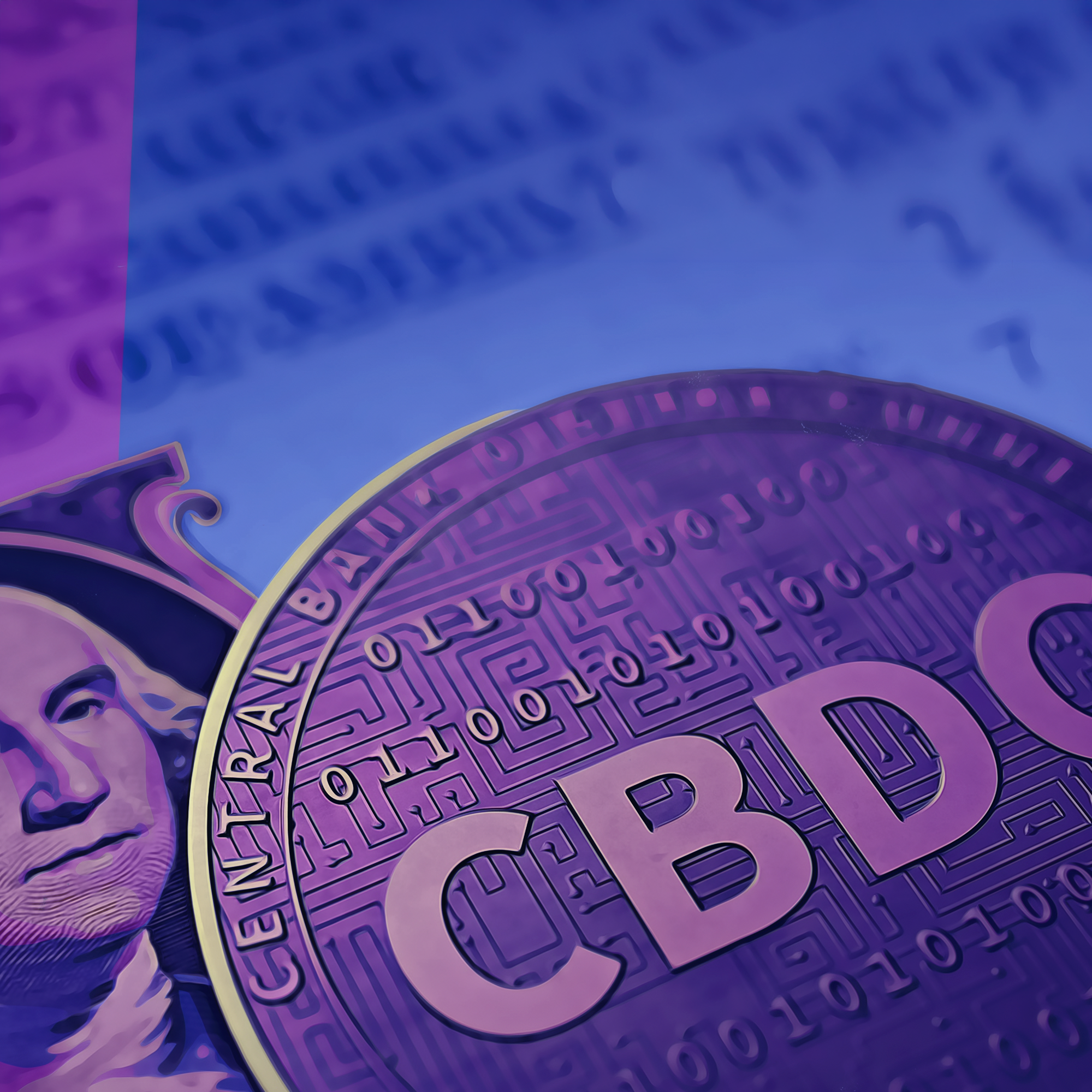
Every day, billions of transactions settle between strangers who have no idea which bank the other uses. That lack of friction is not automatic. Nine-tenths of the money in daily circulation has been created by commercial banks, but it stays trustworthy only because central banks stand behind it, and keep the system in balance.
In this week’s episode Tim Phillips talks to Stephen Cecchetti (Brandeis University, CEPR) about what happens when new forms of digital money test that architecture. Cecchetti is one of the authors of the eighth Barcelona Report in The Future of Banking series, part of the Banking Initiative at IESE Business School, just published by CEPR as a free download.
Will retail central bank digital currencies, tokenised deposits, and stablecoins upset the delicate balance of system that has been running for decades? Stablecoins, for example, do not create money, but they claim the status of money without the institutional guarantee that makes money trustworthy. Three jurisdictions — the US, the EU, and the UK — are each resolving the same underlying contradiction in different ways. None has fully resolved it.
The research behind this episode:
Niepelt, Dirk, Stephen G. Cecchetti, Hélène Rey, and Xavier Vives. 2026. Digital Money: The Future of Banking 8. London: CEPR Press. Available as a free download from CEPR.
To cite this episode:
Phillips, Tim, and Stephen G. Cecchetti. 2026. “The digital money supply.” VoxTalks Economics (podcast).
Assign this as extra listening. The citation above is formatted and ready for a reading list or VLE.
About the guest
Stephen Cecchetti is the Rosen Family Chair in International Finance at Brandeis University, a Research Fellow of the Centre for Economic Policy Research (CEPR), and a Research Associate at the NBER. He was previously Economic Adviser and Head of the Monetary and Economic Department at the Bank for International Settlements, and Director of Research at the Federal Reserve Bank of New York. His research spanning monetary policy, financial stability, and banking regulation has shaped both academic and policy debate over three decades. He blogs at moneyandbanking.com.
Research cited in this episode
Walter Bagehot's lender of last resort doctrine. In Lombard Street: A Description of the Money Market (1873), Bagehot argued that a central bank under stress should lend freely against good collateral at a penalty rate. The prescription remains the intellectual foundation for how central banks manage runs and systemic crises. Cecchetti invokes it to make the point that no private substitute for a central bank backstop has ever proved durable, and that the doctrine is now, one hundred and fifty years on, being tested by instruments its author could not have imagined.
Monetary uniformity, mobility, and elasticity. The three institutional conditions underpinning general acceptance of money, developed in analysis by the Bank for International Settlements and discussed extensively in the…
Web: audioboom.com


