

Bölüm notları
Who kept the courts sitting and the streetlights lit when the state had almost no money to pay anyone?
Two hundred years ago, British local government ran on unpaid labour. In a parliamentary survey of the boroughs from 1835, two in three of the people doing local government work were not paid at all.
James Robinson (University of Chicago, CEPR) explains how this succeeded in this week's episode of VoxTalks Economics. Robinson and his co-authors call this the "embedded state". Members of the elite willingly took the unpaid jobs because the postings carried prestige and led to Parliament, promotion or a paid post. Less glamorous or dead-end postings -- the jailer for example -- had to be paid
But the unpaid officers were more productive than the paid ones.
Robinson argues this is not a quirk of England at that time. Rwanda runs a high-capacity state today on much the same basis, without ever raising the taxes the IMF says a proper government needs. The lesson for anyone trying to make government work: start with the society, not the tax code.
New episode of VoxTalks Economics. Link in bio.
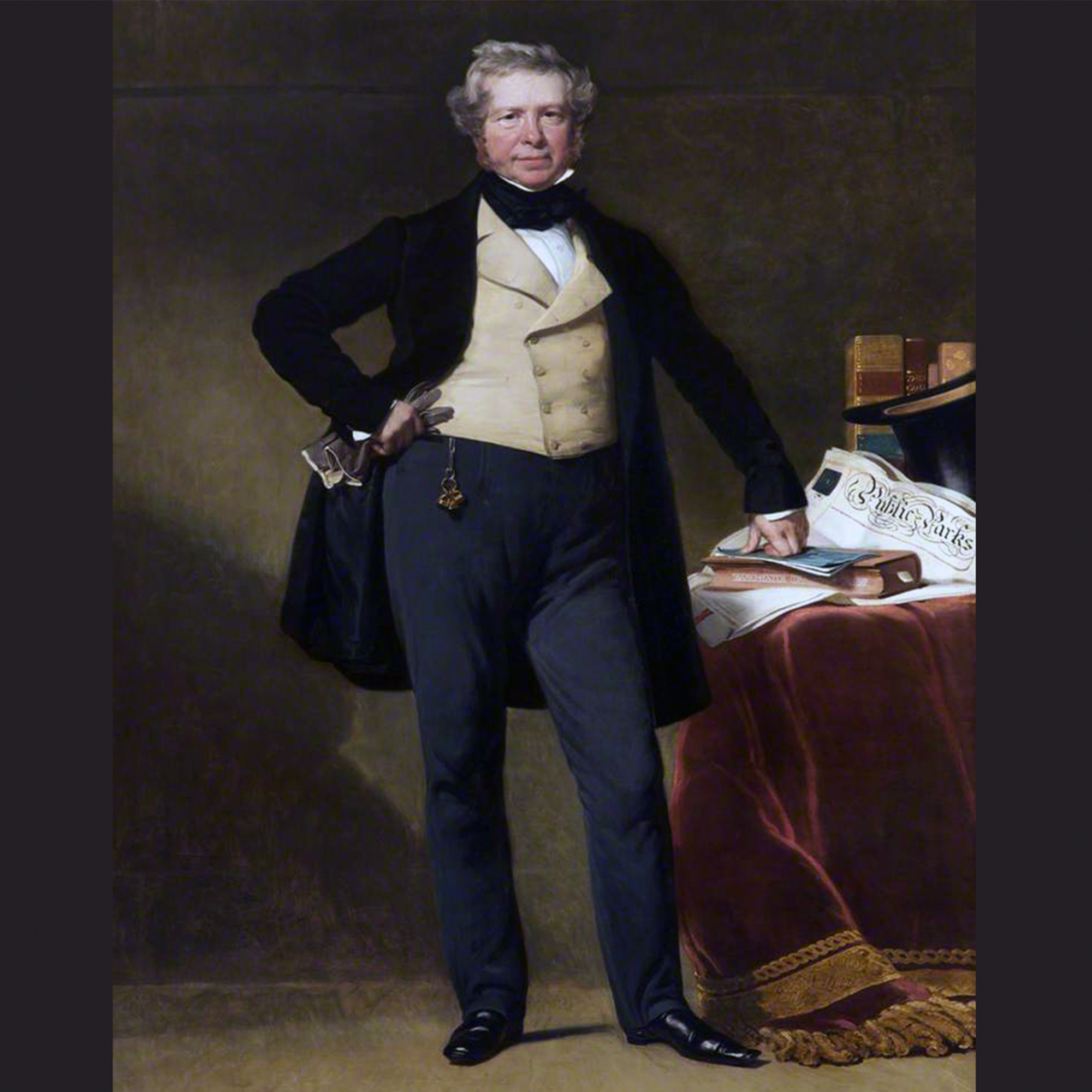
Image: William Benjamin Watkins by George Patten / Manchester Town Hall.
The research behind this episode:
Heldring, Leander, Davis Kedrosky, James A. Robinson, and Matthias Weigand. 2026. "The Success of the Embedded State in England." CEPR Discussion Paper No. 21460. Centre for Economic Policy Research, London.
To cite this episode:
Phillips, Tim, and James A. Robinson. 2026. "The success of the embedded state." VoxTalks Economics (podcast).
Assign this as extra listening. The citation above is formatted and ready for a reading list or VLE.
About the guest
James A. Robinson is University Professor at the Harris School of Public Policy and the Department of Political Science, University of Chicago, and a Research Fellow at the Centre for Economic Policy Research. His research spans comparative political and economic development, state capacity, and the long-run relationship between institutions and prosperity, with fieldwork across sub-Saharan Africa and Latin America. He shared the 2024 Nobel Memorial Prize in Economic Sciences with Daron Acemoglu and Simon Johnson.
Research cited in this episode
The 1835 parliamentary report. After the 1832 Reform Act, Parliament sent lawyers to roughly three hundred of the largest boroughs to record who worked for each borough government, what they did, whether they were paid, how much, and how well the job was done. The commissioners graded public goods directly; whether a jail existed, and if so whether its condition was satisfactory. The 3,500-page report is the factual basis for the paper, and it survives because Parliament itself did not know how these idiosyncratic, often medieval borough governments worked.
The fiscal-military state. The dominant account of British state formation comes from John Brewer's The Sinews of Power (1989), which traces the rise of a tax-raising, salaried fiscal state after the Glorious…
Web sitesi: audioboom.com


