

Episodebeskrivelse
China cannot sell as much as it used to in the United States. That trade has to go somewhere, and somewhere might be Europe.
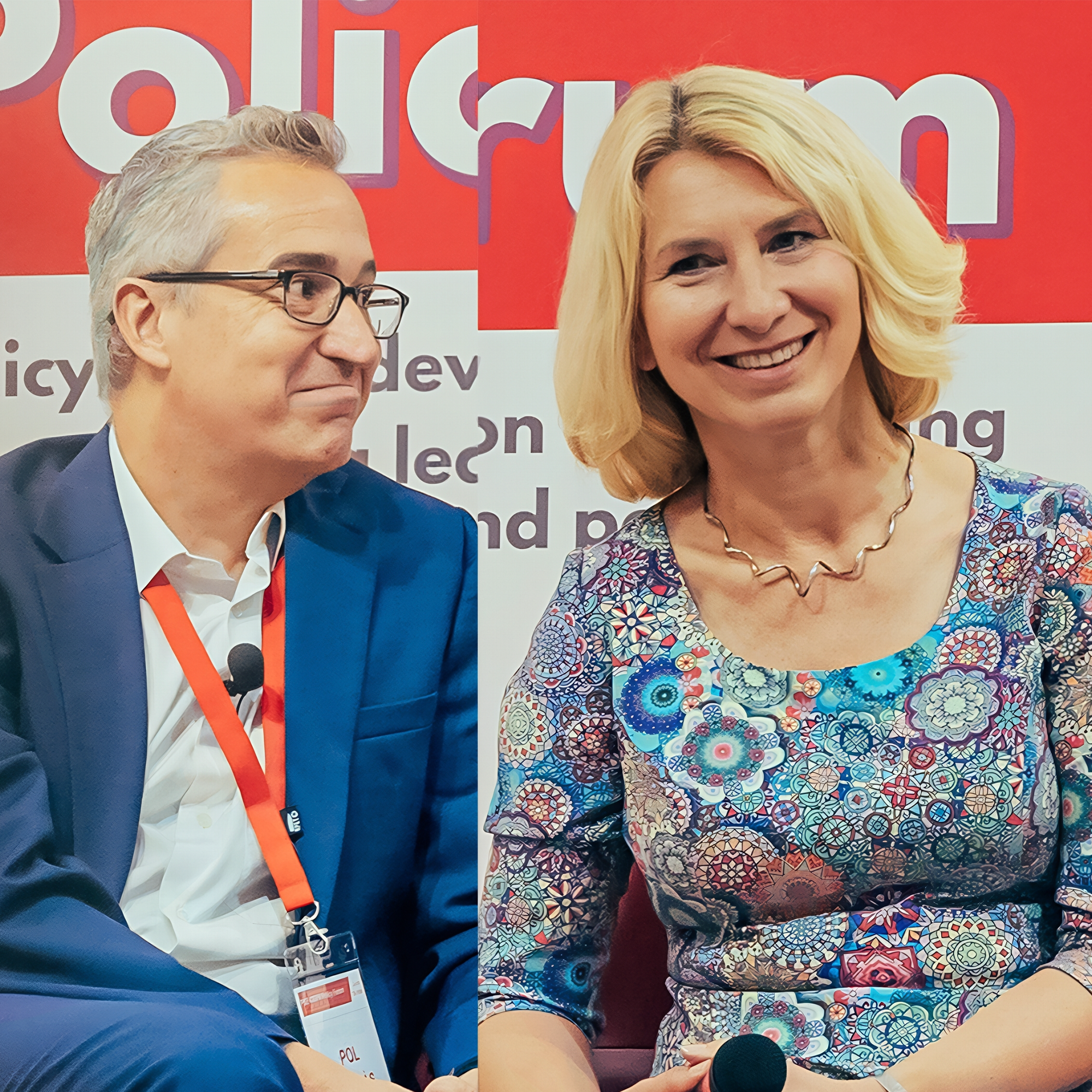
In this week's VoxTalk, Tim Phillips asks Pol Antràs (Harvard) and Beata Javorcik (EBRD, Oxford) what this means for European producers and consumers.
Antràs and Andrea Presbitero have mapped which countries and sectors face the sharpest competition from redirected Chinese exports, and which stand to gain. Does cheap Chinese tech ease Europe's energy cost crisis, or squeeze European manufacturers of wind turbines and electric cars?
If Europe decides to take the gains where consumers and firms can get them, and compensate the producers who are legitimately hurt, how do they go about it? And can raising tariffs in a world of global value chains protecting one sector without damaging others?
New episode, recorded at the PSE-CEPR Policy Forum 2026 in Paris.
The research behind this episode:
Antràs, Pol, and Andrea F. Presbitero. 2026. "The Remains of the Trade: The U.S.-China Trade War and its Aftermath." Preliminary version
To cite this episode:
Phillips, Tim, Pol Antràs, and Beata Javorcik. 2026. "Europe in the Middle." VoxTalks Economics (podcast).
About the guests:
Pol Antras is Robert G. Ory Professor of Economics at Harvard University, a Research Associate at the National Bureau of Economic Research, and a Research Affiliate at the Centre for Economic Policy Research. His research spans global value chains, the organisation of multinational firms, and, most recently, the intersection of trade policy and geopolitics.
Beata Javorcik is Chief Economist of the European Bank for Reconstruction and Development, on leave from her position as Professor of Economics at the University of Oxford and Fellow of All Souls College. She is Director of the International Trade Programme at the Centre for Economic Policy Research. Her research spans foreign direct investment, industrial policy, and, increasingly, the economics of geopolitical fragmentation.
Research cited in this episode:
The Great Reallocation is the term coined by Laura Alfaro and Davin Chor for the reorganisation of United States sourcing away from direct imports from China and toward alternative suppliers such as Vietnam, Mexico, and Taiwan. Antràs and Presbitero's paper extends this idea to third countries, showing that Chinese exports displaced from the American market are increasingly landing in Europe and Asia rather than disappearing.
Geopolitical externality is a concept developed by Laura Alfaro, Maggie Chen, and Beata Javorcik in their working paper "The Battle over Knowledge: Multinationals, Diffusion, and Governance." It describes how knowledge transferred abroad by multinational firms can strengthen a rival state's strategic capability in ways the firm never intended and the market never prices, which is why governments increasingly restrict flows of codified, tacit, and organisational knowledge that would once have passed unremarked.
Voluntary export…
Nettsted: audioboom.com


