

Course 46 - CompTIA Cybersecurity Analyst | Episode 24: Digital Forensics Essentials
· 22 mnt
Catatan episode
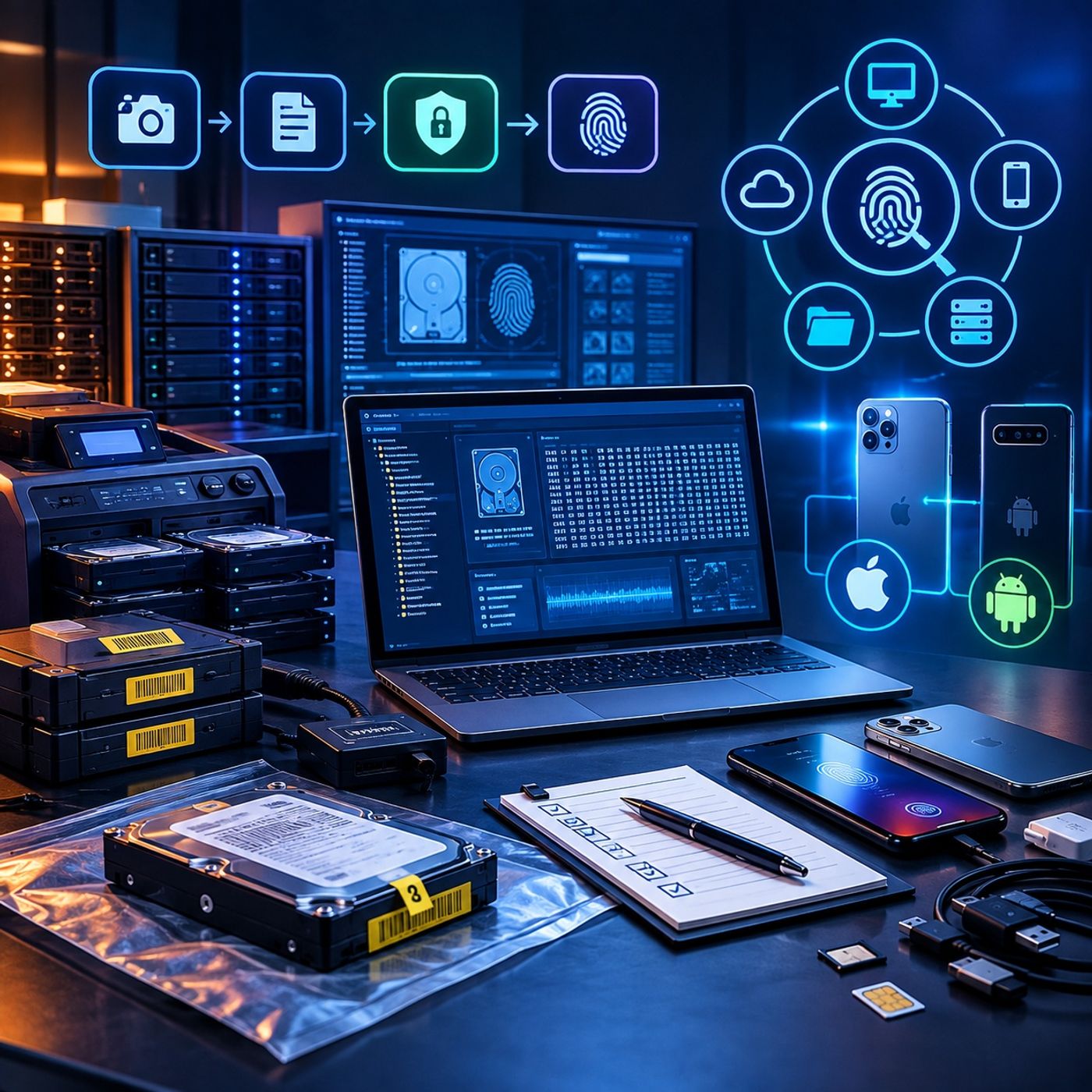
Digital Forensics: Evidence Collection, Preservation, and Mobile Device InvestigationEpisode OverviewThis episode provides an end-to-end overview of the hardware, software, and operational procedures used to conduct forensically sound digital investigations. It explains how investigators collect, preserve, acquire, and analyze digital evidence from traditional computer systems and mobile devices while maintaining evidence integrity and a defensible chain of custody.The episode emphasizes the importance of separating original evidence from working copies, preventing unintended modifications during acquisition, and maintaining accurate documentation throughout the investigation lifecycle.Key Topics Covered1. Forensic Workstations and Evidence Storage
• Forensic Workstations: Design high-performance investigation platforms with suitable multi-core CPUs, substantial RAM, fast system storage, and dedicated evidence-storage capacity.
• Large-Scale Evidence Storage: Use high-capacity storage systems and RAID configurations where appropriate to accommodate large disk images and forensic datasets.
• Multi-Terabyte Evidence: Plan storage capacity around the size and number of acquired devices, working copies, case artifacts, and required backups.
• Controlled Investigation Environment: Separate operating-system and application storage from evidence storage to reduce accidental modification and improve case organization.
2. Forensic Software and Evidence Acquisition Hardware
• Commercial Forensic Suites: Explore established platforms such as EnCase and FTK for evidence acquisition, indexing, examination, and analysis.
• Open-Source and Free Tools: Examine alternatives such as SIFT and the Sleuth Kit (TSK) for forensic analysis and investigation workflows.
• Hardware Write Blockers: Use write-blocking technology during appropriate acquisition procedures to prevent the forensic workstation from modifying the source media.
• Forensic Drive Duplicators: Perform controlled, bit-for-bit acquisition of storage media while preserving the original evidence.
• Evidence Drives: Prepare appropriately sanitized or forensically managed destination media before acquisition and maintain clear identification of each evidence copy.
• Integrity Verification: Use cryptographic hashes and acquisition logs to verify that forensic images remain consistent with the acquired evidence.
3. Field Collection and Investigative Documentation
• Scene Documentation: Use digital photography to document devices, connections, physical conditions, screens, and the overall environment before equipment is disturbed.
• Cable and Equipment Identification: Use labels and systematic documentation to record complex hardware and network connections accurately.
• Chain of Custody: Maintain a documented record of who collected, transferred, accessed, stored, or examined each piece of evidence.
• Investigation Procedures: Use standardized playbooks, collection procedures, and incident-response…
Situs: spreaker.com
