
Course 46 - CompTIA Cybersecurity Analyst | Episode 32: Secure Software Development
· 12 min.
Episodebeskrivelse
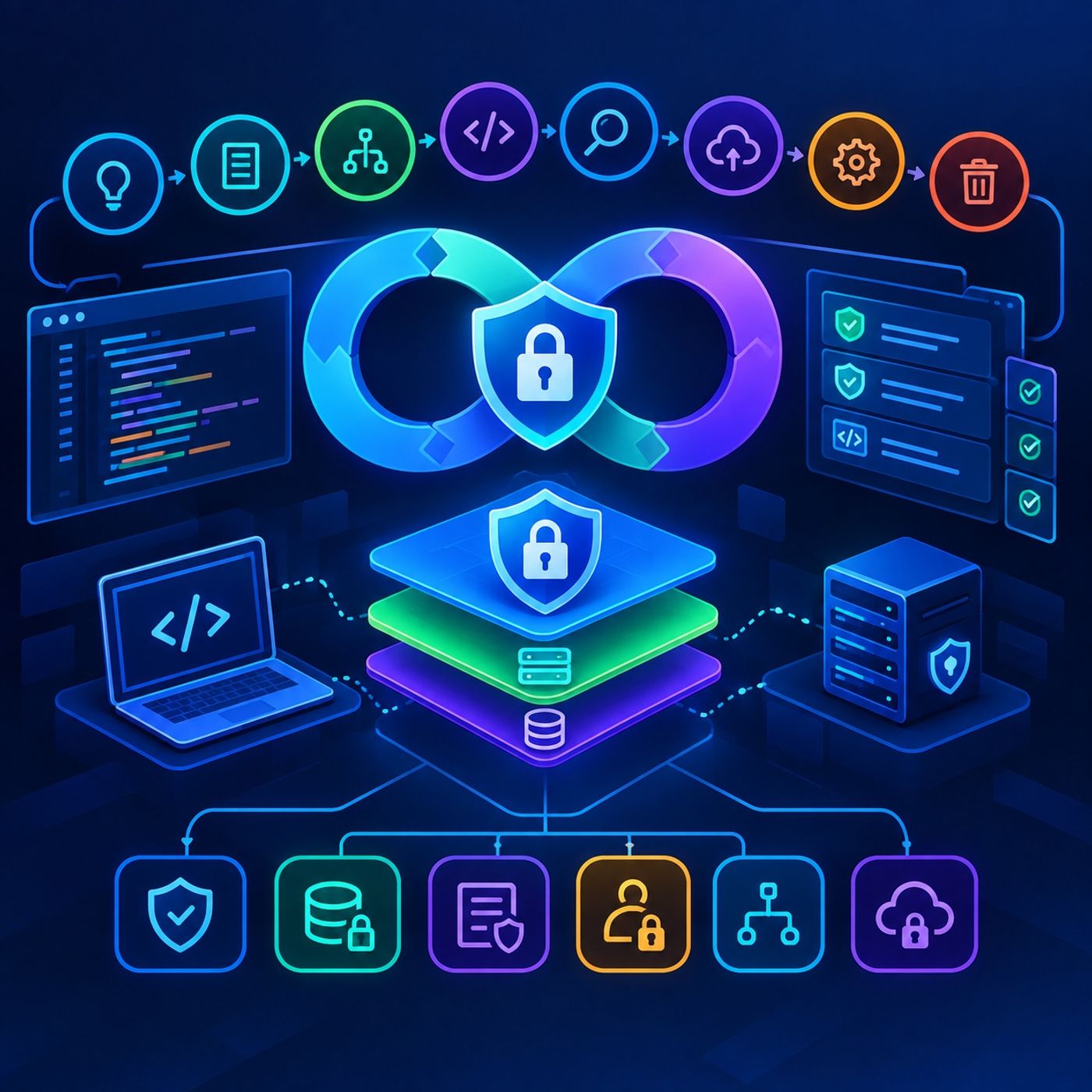
Foundations of Secure Software DevelopmentEpisode OverviewThis episode explores how security can be integrated throughout the software development process, connecting the Software Development Life Cycle (SDLC), common development methodologies, and practical secure coding principles. It emphasizes the importance of addressing security early rather than treating it as an afterthought during deployment or maintenance.Key Topics Covered1. The Software Development Life Cycle (SDLC)The episode examines the major stages of the software lifecycle:
• Planning and Feasibility — defining business objectives, scope, resources, and constraints.
• Requirements Analysis — identifying functional, technical, and cybersecurity requirements.
• System and Application Design — incorporating secure architecture, access controls, data protection, and threat considerations.
• Development — implementing functionality according to secure coding standards.
• Testing and Validation — performing functional, security, integration, and user acceptance testing.
• Deployment, Training, and Transition — moving the application into operational use while preparing users and administrators.
• Operations and Maintenance — monitoring, patching, fixing defects, addressing vulnerabilities, and adapting to changing requirements.
• Retirement — securely decommissioning applications, systems, credentials, data, and supporting infrastructure.
A central theme is shifting security left: security requirements, threat analysis, and architectural controls should be considered early in the lifecycle rather than postponed until after the application has already been built. Maintenance can represent a substantial portion of total lifecycle effort, but exact percentages vary by project and development environment.2. Software Development ModelsThe episode compares several approaches to organizing software development:
• Waterfall — sequential progression through defined phases.
• V-Model — emphasizes corresponding verification and validation activities alongside development stages.
• Spiral — iterative development centered on risk identification and mitigation.
• Rapid Application Development (RAD) — emphasizes rapid prototyping and iterative user feedback.
• Agile — iterative and incremental delivery through short development cycles.
• Big Bang — minimal formal planning or structure, carrying significant project and quality risks.
Agile concepts covered include product backlogs, user stories, sprint planning, planning poker, timeboxing, and velocity. Sprint duration can vary by organization; a 30-day sprint is one possible implementation rather than a universal requirement. Velocity is primarily a historical planning metric rather than a direct measure of individual developer productivity.3. Secure Coding and Application DefenseThe episode then moves from lifecycle theory into practical application security. Key practices include:
• Establishing organizational security policies and coding…
Website: spreaker.com