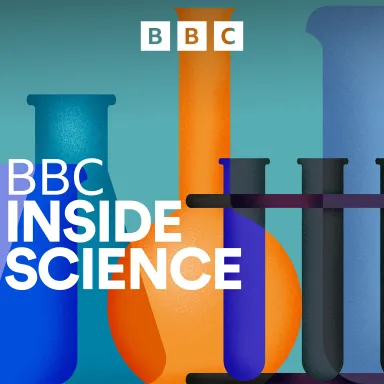
BBC Inside Science
από BBC Radio 4
Τελευταίο επεισόδιο
Has China finally curbed its emissions?
Has China finally curbed its emissions?
Σχετικά με αυτό το podcast
A weekly programme that illuminates the mysteries and challenges the controversies behind the science that's changing our world.
Επεισόδια
Τα νεότερα 50 από 678 επεισόδια
- Has China finally curbed its emissions? · 26 λεπ.The Conference of the Parties (COP 31) has kicked off in Antalya, Turkey, with a focus on implementation and acceleration. But as countries work towards their climate targets, a…
- The zeptoverse · 26 λεπ.What does it mean to look inside the very fabric of the universe? This week on Inside Science, Tom Whipple enters the zeptoverse with particle physicist Harry Cliff, exploring a…
- The race to protect a third of the world · 26 λεπ.It's the time of year when nations come together to try and agree on a plan to futureproof the planet. But in the lead up to the Conference of the Parties 31, another meeting…
- Is there time on Mars? · 26 λεπ.The first ever spacecraft to bring Martian samples back to Earth has launched from Japan. However, before the spacecraft returns from Phobos in 2031 there are many complex…
- The climate changing power of 400 billion toasters · 26 λεπ.Back in May, we checked in on the developments in the eastern Pacific’s ocean currents, that we call El Niño. We said that stirrings in the surface suggested there might just be…
- Will AI complete mathematics? · 26 λεπ.Tom Whipple investigates one of the biggest days in the 10,000 year history of maths. This week, overnight, OpenAI dropped hundreds of mathematical papers onto the internet. From…
- The future of particle physics · 28 λεπ.Tom Whipple travels 100m below Switzerland to the tunnels of CERN's Large Hadron Collider (LHC) where the beams have been powered down to begin the High-Luminosity LHC upgrade…
- Do you have the correct time? · 26 λεπ.In October members of the General Conference on Weights and Measurements are voting to change how we keep time on Earth accurate. Currently an additional second, known as a Leap…
- AI to solve the energy crisis? · 26 λεπ.Nuclear fusion energy, the idea of copying the sun’s heat source on earth to make limitless commercial energy is famously always 30 years away. This month, the UK and US have…
- What AI agents talk about behind your back · 26 λεπ.Is AI really plotting against us? In a week where an Anthropic researcher believes there is more than a 10% chance AI 'could kill all humans' we're delving deeper into the…
- The quest for dark matter · 26 λεπ.The quest for Dark Matter just got interesting. Researchers on an international project called the Lux-Zeplin (LZ) Dark Matter Experiment reported they may have discovered the…
- The day of the datacentres · 26 λεπ.Reports about the impacts of datacentres, including carbon emissions, water usage and power consumption, vary drastically and the truth can be hard to decipher. Deborah Andrews…
- Is the era of the cancer vaccine upon us? · 26 λεπ.This week Merck (known as MSD in Europe) and Moderna announced that a personalised cancer vaccine had significantly improved the outcomes of melanoma patients. Is the era of the…
- Should we be scared of AI viruses? · 26 λεπ.The extreme possibilities of synthetic biology hit the headlines last week, when researchers at Stanford University in the US announced they had created new kinds of viruses…
- The state of our substrate: What is drought doing to our soil? · 26 λεπ.Large parts of Europe are in the grip of drought. According to the UK Meteorological Office, last week was the UK's driest July on record. Katie Field, professor of plant-soil…
- Are we alone in the universe? · 26 λεπ.Scientists have long referred to the Goldilocks zone – the region around a star where conditions are not too hot and not too cold but “just right” for life. Joined by a live…
- Testing testosterone testing · 26 λεπ.Secretary of Defence Pete Hegseth has announced that the US military will be screening military personnel aged 30 and older for testosterone deficiency. Those found with low…
- How might we spot nukes in space? · 26 λεπ.A few years ago a satellite speeding through the Van Allen belt in earth orbit raised concerns that it may include a nuclear weapon. An explosion in that orbit would take out…
- Are we one step closer to creating life in a lab? · 26 λεπ.Synthetic biologist Kate Adamal and her team at the University of Minnesota published their research into the lab-created ‘SpudCell’ in a significant step towards building life…
- How do you immortalise natural history? · 26 λεπ.During this year’s visit to the Royal Society Summer Science Exhibition in London, Tom Whipple discovers how sea urchins are being used to develop techniques to digitally…
- Can we engineer ourselves out of a heatwave? · 26 λεπ.As the UK and Europe battles with extreme weather warnings, is it time for us to consider some more extreme tactics to tackle the heat? Tom Whipple is joined by Mark Maslin…
- Finding the evidence for the social media ban · 26 λεπ.After this week’s announcement that under-16s will be banned from major social media platforms, we delve into the evidence behind the ban with Professor Amy Orben, Programme…
- How do you build an unbuildable tower? · 26 λεπ.After 144 years the tallest tower on the Sagrada Familia is finally complete, but when Gaudi first designed it, the technology to build the tower didn’t exist. We’re joined by…
- How is AI going to change science? · 26 λεπ.Are we moving away from science as a strictly human endeavour? This is the view of Pushmeet Kohli, head of AI for Science at Google DeepMind. He joins Tom Whipple to discuss the…
- Plankton's untapped potential · 26 λεπ.From Hay Festival 2026, a dive into a big year for our oceans, with plankton specialist Vincent Doumeizel and physicist turned oceanographer Helen Czerski. Vincent is author of…
- El Niño is nigh, but so what? · 26 λεπ.With 2023’s El Niño – a recurring pattern of extreme weather across the pacific basin - still leaving a bad taste in people's mouth, 2026 sees an El Niño stirring in the Pacific…
- The science behind hantavirus · 26 λεπ.Following three deaths linked to the deadly hantavirus disease on a cruise ship this month, the scientific community is racing to answer the many unknown questions surrounding…
- Should Pluto become a planet again? · 26 λεπ."Make Pluto a planet again" was the call this week from Donald Trump’s NASA Administrator, Jared Isaacman. The icy body was first seen in 1930 and was the only planet whose…
- Why is Europe the fastest-warming continent? · 26 λεπ.The latest European State of the Climate report has found that Europe is once again getting warmer, and at a rate that is twice as fast as the global average. Tom Whipple is…
- Can we prevent the next pandemic? · 26 λεπ.A phase 3 clinical trial is underway to determine the effectiveness of an mRNA vaccine for H5N1, a strain of influenza that is currently of concern. The virus, which is commonly…
- Forty years on from nuclear disaster · 26 λεπ.For 40 years scientists have been fascinated by the exclusion zone surrounding the Chernobyl Nuclear Power Plant in Ukraine. Professor Jim Smith from the University of Portsmouth…
- Return to the moon · 26 λεπ.This week, humans once again looked down on the magnificent desolation of the lunar surface, from the orbit of the moon itself. They saw earth rise and earth set. They named the…
- Responding to your science questions · 26 λεπ.This week, we’re letting you run the airwaves. Victoria Gill puts your science questions to Catherine Heymans, Astronomer Royal for Scotland and Professor of Astrophysics at the…
- The future of space travel · 26 λεπ.Are we, at last, getting the spacefaring future we were promised back in the 1960s? This week, NASA has been outlining ambitions for a base on the Moon and, perhaps more…
- Is quantum computing having its moment? · 26 λεπ.In a bid to invest in the future of computing and keep emerging quantum companies on their shores, the UK government has announced a £2 billion ‘Quantum Leap’ fund. Tom Whipple…
- Is the Earth warming faster than we expected? · 26 λεπ.This week new research suggests that in recent years the Earth has been warming faster than we predicted. But scientists are undecided on whether this change is going to be…
- How is war being fought in space? · 26 λεπ.This week Inside Science comes from Space Comm Expo in London, one of the biggest space conferences in the world. Tom Whipple explores the conference with Suzie Imber, Professor…
- Does new science get us closer to finding out how life on earth began? · 26 λεπ.Perhaps it’s the biggest question science has left to answer, how did life begin? Now, molecular biologists in Cambridge university have discovered tiny molecules of RNA which…
- How to bury radioactive waste · 26 λεπ.A small but mighty problem: what to do with the radioactive waste we have already made? Professor Clare Corkhill from the University of Bristol gives us the run down on how…
- Will there be a city on the moon in ten years? · 26 λεπ.Elon Musk says his company Space X will focus on establishing a ‘self-growing city’ on the moon before going to Mars. Why the pivot? And what would it take to build a lunar…
- Where do forever chemicals come from? · 26 λεπ.This week the UK Government decided it was worried enough about so called ‘forever chemicals’ to bring in it’s first ever plan to tackle them. Environment Minister Emma Hardy…
- Should we rethink navigating by GPS? · 26 λεπ.This week 14 European countries warned that “maritime safety and security” was being put in jeopardy by Russian interference. The Royal Institute of Navigation says GPS is so…
- How is air travel returning to supersonic speeds? · 26 λεπ.It’s exactly half a century since two Concorde jets took off from Paris and London respectively. The supersonic jet would come to define top end luxury travel. But Concorde has…
- Why is Nasa sending people around the moon? · 26 λεπ.The space science world is buzzing. In the next few days, NASA is expected to begin the rollout of its Artemis II rocket to the launch pad with the launch itself expected as…
- How rare are Greenland’s rare earth elements? · 26 λεπ.President Trump has his sights set on Greenland. If he succeeds, what mineral wealth will he find there? Adrian Finch, Professor of Geology at St Andrews University has been…
- How did President Trump transform science in 2025? · 26 λεπ.This week President Trump’s director of the Office of Management and Budget announced that a major climate research centre would be broken up. 2025 has brought a wave of…
- Would our ancestors have benefited from early neanderthals making fire? · 26 λεπ.400 thousand years ago our early human cousins dropped a lighter in a field in the East of England; evidence that was uncovered this week and suggests that early neanderthals…
- A 'functional' cure for HIV? · 26 λεπ.Almost 40 years ago, the first treatment was approved for HIV, but it came with a warning: “This is not a cure.” On the week of World AIDS Day, Kate Bishop, principal group…
- Why aren’t gene therapies more common? · 26 λεπ.This week, a world first gene therapy treats rare Hunter syndrome. Could these personalised medicines be used more widely? We speak to Claire Booth, professor in Gene Therapy at…
- What’s in the wording of the COP 30 negotiations? · 26 λεπ.COP 30 delegates from around the globe are about to depart the Amazon city of Belem in Brazil. But not before some very important documents are drawn up. Camilla Born, former…