
Notatki do odcinka
🦷 Plaque Friday™ is here!
Get 20% off Protrusive Guidance Ultimate for as long as you stay, plus 7 days free to try it. That’s every masterclass, AskJaz, verifiable CPD on hundreds of podcast episodes, and our new live series Caries, Cracks and Contact Points with Dr Ronit Patel. Use code PF26 at checkout. Ends Monday 30 November, 11:59pm UK.
👉 https://protrusive.co.uk/plaquefriday
Sleep, Airway and Mouth Breathing: An ENT’s Guide for Dentists
Could a “normal” sleep study still be missing your patient’s airway problem?
Why do women and children with real symptoms keep scoring “mild”?
Should a mouth-breathing child see a myofunctional therapist — or an ENT first?
And which four questions screen a child for sleep problems in under a minute?
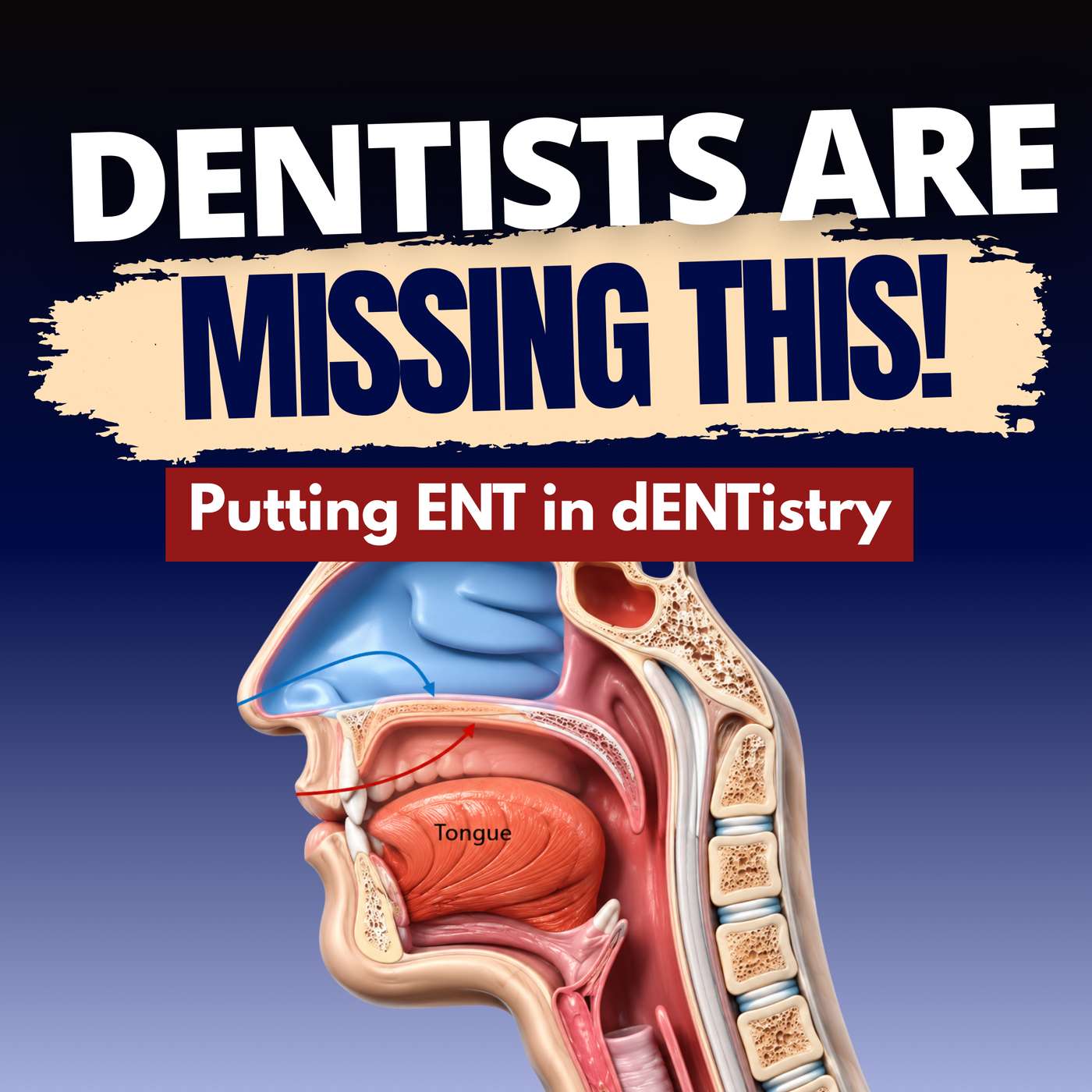
The roof of the mouth is the floor of the nose — so ENT and dentistry should be in constant dialogue. In practice, they rarely are. In this one, Dr David McIntosh— an Australian ear, nose and throat surgeon with a deep niche in sleep-disordered breathing — makes the case for why that has to change, and gives dentists practical ways to screen and refer. He is direct, analogy-rich and doesn’t mince words; expect a few positions that cut against the grain of how sleep apnoea is usually handled.
https://youtu.be/QVEc0ocxTCc
Watch PDP272 on YouTube
Protrusive Dental Pearl: When the Numbers Mislead
Dentists love data — the AHI, the cut-offs (over 5 is mild, over 30 is severe). But take those numbers with a pinch of salt: the thresholds are arbitrary, and a single score tells you nothing about why a patient has the problem.
They don’t account for individual variability — especially in women and children, where a mild score can sit right alongside significant symptoms. Read the number with the anatomy and the phenotype — the clinical signs and the airway assessment — never instead of them.
What You’ll Take From This Episode
This conversation reframes sleep-disordered breathing from a number on a report into something you can localise and refer.
• A sleep study tells you IF, not WHY — sleep-disordered breathing is the whole spectrum; a normal study doesn’t mean normal breathing.
• Phenotyping the airway — map the individual anatomical causes instead of trusting a single score.
• Why women get missed — the gender bias built into standard adult screening tools, and what to ask instead.
• The four-question filter for children — snore, mouth breathe, stop breathing, wake up tired: any ‘yes’ means refer.
• Treat the cause before the function — why myofunctional therapy comes after the obstruction is cleared, not before, and how expansion and surgery are matched to the anatomy.
Highlights of This Episode
• 00:00 Teaser
• 01:00 Why ENT and Dentistry Should Be Talking
• 02:51 Protrusive Dental Pearl: When Sleep Data Misleads You
• 03:46 Meet the ENT Who Works With Dentists
• 06:00 Sleep Physician, ENT or Dentist: Who Should Lead?
• 07:26 Why Children and Adults Are Completely Different
• 08:58 Sleep-Disordered Breathing Is…
Strona: share.transistor.fm


